
Manage HR Magazine: Specials Magazine
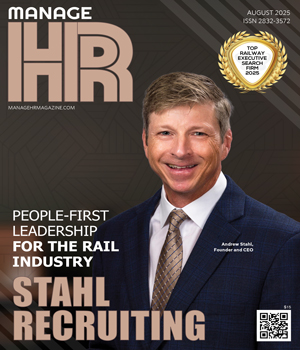
While the executive search industry leans into automation and analytics, Andrew Stahl remains grounded in something rarer: the art of understanding people. He speaks about business like a philosopher. He listens more than he talks and remembers not only what a candidate wants in their next role, but where their kids go to school and what their spouse thinks about relocating to a new city. Stahl Recruiting, the firm he founded and leads, places senior leaders in critical roles across North America’s rail and transit sectors. What may sound like a narrow niche is anything but. Railroads underpin the U.S. economy, moving more freight over land than any other mode of transport. Transit systems connect cities and towns, powering everything from daily commutes to regional development. In a very real sense, the people Stahl places help move the country—literally and figuratively. But for Stahl, the mission isn’t just about logistics or leadership. It’s about doing things the right way. “The time is always right to do the right thing,” he says, echoing Martin Luther King Jr.—not just as a quote, but as an operating principle. It might sound idealistic, but it’s also proven to be an effective business strategy. Stahl Recruiting blends deep scholarly expertise in rail economics with a people-first leadership approach, helping clients navigate complex industry challenges with bespoke talent solutions. Under Stahl’s guidance, the company has become a model of excellence in executive search—founded on honesty, integrity, and ethics, and positioned as the go-to provider in the space. A Moral Compass, a Market Need Stahl’s path into recruiting didn’t begin in an HR department or with a sales quota. It began in graduate school, where he was researching the transportation industry. What started as academic curiosity evolved into admiration for rail’s quiet complexity—the systems, the safety, the scale. “I was struck by how critical it all was, and how little most people thought about it,” he recalls.
Recruitment
In today’s evolving workplace, wellness isn’t a perk—it’s a performance driver. Companies striving to support hybrid teams must go beyond one-off wellness initiatives and think systemically about how daily habits are shaped. When nutrition, communication, and behavioral design align, wellness becomes more than a moment—it becomes a movement embedded into company culture. That’s exactly the value Garten delivers. Far more than a food service provider, Garten is a workplace wellness infrastructure partner that helps companies embed wellbeing into the rhythm of everyday work. Through a unique combination of brand strategy, nutrition science, and real-time analytics, Garten turns food into a culture-shaping tool—one that signals care, builds trust, and measurably improves outcomes. It’s a model designed not just to improve access to healthy choices, but to change how people feel about their workplace. With subtle cues repeated across environments and touchpoints, Garten helps employees feel seen, supported, and valued. That shift in experience influences behavior, deepens engagement, and ultimately drives both health and business performance. What began as a premium snack provider has grown into a platform for culture design. Today, Garten partners with leading organizations to create wellness ecosystems that reflect corporate values, engage employees, and scale with the demands of modern, distributed workforces. “We’re not just offering food, we’re reinforcing value. And our brand helps employees recognize that their well-being is part of what the company truly values,” says Gary Batara, VP of Marketing. “If we don’t shape how people feel about well-being, we can’t expect them to engage with it.” The foundation of its model rests on a clear understanding of environment, communication and data each play a role in shaping behavior. Wellness is treated as a daily experience. Nutrient-dense options are intentionally highlighted through curated snack displays while digital nudges reinforce a consistent message—health matters here. This philosophy carries into how Garten collects and applies data. Its proprietary Analytics Dashboard equips companies with a clear view into the nutritional choices employees make. Rather than tracking individual habits, the platform evaluates broader trends—how consumption aligns with the Healthy Eating Index (HEI), how different locations engage, how budgets are managed and how employees respond to offerings. Insights are gathered across 13 key dietary categories that includes whole grains, fruit, sodium and sugar.
Top Financial Intelligence Platform 2025

Today’s employee benefit packages go beyond health insurance and retirement benefits. Forward-thinking companies are reshaping benefits strategies to prioritize financial well-being. They recognize that financial stress doesn’t stay at home with employees. It spills into the workday, quietly eroding focus and well-being. Rising financial strain from inflation and lingering student debt is now compounded by frictionless digital spending and easy access to credit, making financial stress one of the most pervasive challenges in today’s workplace. IDIQ, a leading financial intelligence company, is helping employers meet this growing need through tools that blend smart technology with human insight. At the heart of the solution is a powerful combination of AI-driven analytics and one-on-one guidance from certified financial coaches designed to address the root causes of day-to-day money pressures. The platform adapts to each employee’s goals, credit profile and spending patterns, avoiding one-size-fits-all tools. “We’ve designed our offerings to be more than just products; they’re trusted solutions that bridge the gap between the real challenges that employees face and the everyday support they deserve,” says Jeffrey Mandel, president of monetization at IDIQ. For employers, the impact is twofold. The platform integrates seamlessly into existing benefit ecosystems, achieving enrollment rates over twice the industry average. Cost efficiency is built into its design, delivering meaningful value without overwhelming benefit budgets, an essential advantage in today’s rising healthcare premiums and tightening margins. Offerings such as identity protection, credit-building tools, legal support and will preparation are all designed to be affordable, effective and tailored for real-life impact. A Roadmap to Financial Resilience IDIQ’s intelligent platform analyzes millions of financial data points to detect risk factors, uncover patterns and surface insights employees might otherwise overlook. These insights are translated into personalized financial roadmaps—clear, achievable plans that reflect each individual’s unique circumstances, spending behavior and credit history. But insight alone isn’t enough. IDIQ amplifies the impact of its technology by integrating financial coaches who help make sense of complex financial situations. They support employees navigating challenges like high-interest debt or the stress of living paycheck to paycheck, helping them move toward long-term goals such as homeownership, retirement or saving for a child’s education. Financial coaching also helps employees weigh real-life decisions, like balancing debt repayment with saving for the future, transforming financial uncertainty into forward momentum.
Top Legal Search and Recruiting Services 2025
Elisa is a mid-level associate at a litigation firm in New York, preparing for trial under a tight deadline. In the midst of this high-pressure period, she receives a call from a recruiter who found her contact information online. With no prior connection, the recruiter briefly mentions an opportunity at a competing firm and asks if she might be open to a move. Given the timing and lack of context, Elisa quickly ends the call—left with an unclear impression of both the recruiter and the firm being represented. While outreach like this may occasionally yield results, it often lacks the strategic understanding and timing that busy professionals expect. This is where Young Mayden, LLC (www.youngmayden.com) leads by example. Young Mayden is not a legal staffing company, but a legal search firm that prioritizes thoughtful, informed, and relationship-driven recruitment, with an exclusive focus on placing lawyers. The firm identifies the right attorneys for roles within law firms, corporations, and nonprofit legal organizations, including bar associations and judicial institutions, with offices in Charlotte, North Carolina, and Nashville. “We don’t rely on cold calling or mass outreach,” says Kenneth E. Young, principal. The Nashville office is headed by May Smythe. “Our goal is to understand a client’s need through research, personal meetings, and in-depth conversations, allowing us to recruit highly qualified candidates who are aligned both professionally and culturally.” Young Mayden, LLC works nationally with a client base that includes major organizations such as the American Bar Association (ABA), the New York State Bar Association, and the California and Texas Bar Associations. It also partners with national institutions like the Uniform Law Commission in Chicago and the National Judicial College in Nevada. This wide-reaching network reflects more than a list of clients; it’s built on the credibility and firsthand legal experience of its founders. Both Barbara Mayden and Kenneth Young practiced law at major firms and worked directly with general counsel of corporations, equipping them to understand the nuanced legal needs of diverse organizations. For instance, the legal talent required by a manufacturing company differs greatly from that of a Silicon Valley tech firm.

Top Leadership Development Company 2025

“Leadership development only works when it becomes part of everyday behavior. Fierce turns what’s taught into what’s done, every day where it counts,” says Cameron Johnson, executive vice president of revenue. Real Results. Real Change Fierce was created to solve the common shortcomings of traditional leadership development training, including low retention, limited application, and inconsistent outcomes. Independent research by Korn Ferry confirms the measurable effectiveness of Fierce’s tools. The American Business Awards have also recognized its programs for long-term impact across industries. Clients frequently report high satisfaction, with Net Promoter Scores often exceeding 70. While average scores may vary, Fierce consistently performs above industry norms. In addition, studies on experiential learning methods similar to those used by Fierce show knowledge retention rates as high as 90 percent, compared to around 30 percent with conventional training. What sets Fierce apart is the integration of learning with everyday work. Tools like Pulse provide biometric and behavioral insights in real time, helping users identify patterns, improve emotional awareness, and respond more effectively under pressure. The AI Coach guides reflection and action through timely prompts that align with actual workplace challenges. This turns coaching into a continuous, personalized experience available to every employee.
Executive Search

Avoid the Dreaded Role Play: DIY Simulations in Leadership Development
Colleen Berish, Director of Learning and Development, FCCI Insurance Group
Executive Search

A Strategic Approach To Employee Benefits, Wellness, And Technology
Candace Villafanez-Dukes, Corporate Human Resources/Payroll & Benefits Manager, Long John Silver’s, LLC
Diversity and Inclusion

A Human- Centered DEI Perspective
Michelle Currier SHRM-CP, CDM,CFPP, Senior Director, Human Resources, CCL Hospitality Group (Part of Compass Group North America)
Executive Search

The Future of Talent Development: Embracing Technology for Scalable and Impactful Learning
Rebecca Tooley, Vice President, Corporate Learning & Talent Strategy, Swift Transportation
Executive Search

Intelligent...Artificial Intelligence?
Argyro (Iro) Tasitsiomi, PhD, Head of AI, Investments Data Science & Research, T. Rowe Price

IN MY OPINION
Executive Search
HR 2.0: Technology, Talent and the Path to Excellence
Jody Joles, Director Human Resources Operations, Comfort Systems USA

LAST WORD
Recruitment
Strategic Enforcement of Workforce Evolutions
Heather Wheaton, Senior Director of Human Resources, Kellanova
IN FOCUS

Strategic Leadership Development: Building Resilience and Agility for the Future
Businesses are adapting to flatter hierarchies and cross-functional teams, which require distributed leadership and collaboration rather than traditional top-down decision-making.

Driving Leadership on Track: Future of Railway Executive Search Services
The railway executive search industry is driven by tech-driven recruitment, a growing demand for strategic leadership, and specialized approaches to address industry complexities, sustainability goals, and digital modernization.
EDITORIAL
The Rising Importance of Specialized Services in Shaping Corporate Success
As businesses continue to navigate a rapidly changing global landscape, the need for specialized services that support and drive organizational growth has never been more pressing. From enhancing leadership capabilities to addressing the complexities of talent acquisition, financial strategy, employee well-being, and even industry-specific executive placements, companies are turning to niche experts to stay competitive in an increasingly dynamic environment.
One of the key areas of focus is leadership development, where organizations seek ways to cultivate effective leaders who can guide teams through the challenges of today’s complex business landscape. Tailored leadership programs, including executive coaching and team development, have emerged as essential tools for nurturing leadership potential across all levels of the organization. The best programs go beyond traditional management training, offering deep insights into emotional intelligence, communication, and strategic thinking.
Similarly, financial intelligence platforms are emerging as game-changers for companies looking to make informed, data-driven decisions. As financial markets become increasingly volatile, these platforms enable organizations to analyze trends, manage risks, and plan strategically, ensuring they remain competitive and profitable in uncertain times.
On the talent acquisition side, legal search and recruiting services are playing a pivotal role in finding top-tier professionals in a highly competitive market. With ever-evolving regulations and the need for specialized legal expertise, companies require legal recruiters who understand both the industry’s intricacies and the specific needs of their organizations.
Corporate wellness services are also gaining prominence, as companies recognize the impact of employee health and well-being on productivity, engagement, and retention. Integrating mental health, physical wellness, and work-life balance initiatives into the corporate structure is no longer a luxury—it’s a necessity.
Lastly, executive search firms specializing in the railway sector are tasked with sourcing leaders capable of navigating the unique challenges of the transportation industry. The railway industry, with its intricate operational needs and regulatory challenges, requires leaders who can drive innovation and oversee large-scale projects that align with both safety standards and customer expectations.
In this edition, we explore how these specialized services are shaping the future of organizations, providing tailored solutions that drive efficiency, innovation, and overall success. We highlight the leading firms in each category, showcasing how they’re meeting the unique demands of today’s corporate world.

