



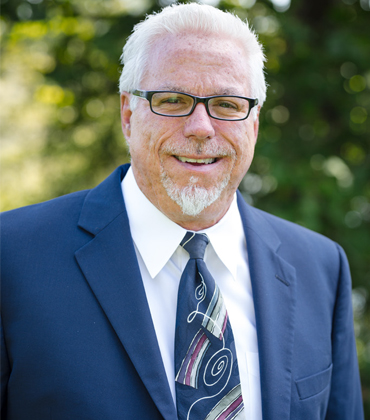
 Paul Sylvester, President, Executive Business Coach
Traditional leadership development focuses on skills and strategies. Behavioral coaching, on the other hand, explores why leaders react under pressure, how they make decisions, and which subconscious patterns influence their communication. Subtle habits like avoiding confrontation, over-controlling, and failing to listen can quietly derail careers, even when technical expertise is strong. Behavioral coaching brings these blind spots to the surface and replaces them with self-awareness, emotional agility, and intentional action.
Yet, there are surprisingly few coaches who specialize in this space. Paul Sylvester is one of the rare exceptions, and he is also perhaps the best. As president and executive business coach of Sylvester, he helps leaders understand their own behavior, decode the behavior of others, and lead from a place of clarity, trust, and emotional intelligence. His approach blends business acumen with behavioral insight to create lasting changes that extend far beyond the boardroom.
“Most leaders don’t fail because they lack strategy. They fail because they underestimate behavior, including how people think, react, avoid, or resist when the pressure is on. My job is to bring that into focus so change actually sticks,” says Sylvester.
That practical, grounded approach stems from lived experience. For most of his career, Sylvester was making high-level decisions, navigating organizational complexity, and leading major transformation efforts as Chief Information Officer for a multi-billion-dollar company. He helped take the company public and stood on the NYSE floor, ringing the bell in celebration.
But even in that moment of triumph, something didn’t sit right. While stock tickers flashed success, he saw a different reality: a leadership team riddled with tension, mistrust, and misalignment. Despite financial wins, the culture was quietly eroding. That disconnect became his turning point.
What came next wasn’t retirement, but reinvention. Having witnessed firsthand how blind spots held leaders back and how poor team dynamics silently sabotaged results, Sylvester set out on a mission to help people lead and work better, together.
Today, he is one of the few in the field of behavioral business coaching, blending leadership development with the science of behavior, communication, and emotional intelligence. Working with executives, directors, and teams, he helps them solve challenges and uncover the behavioral patterns and internal drivers behind those challenges.
-
Most leaders don’t fail because they lack strategy. They fail because they underestimate behavior, how people think, react, avoid or resist when the pressure’s on. My job is to bring that into focus, so change actually sticks
Rather than leaning on motivational clichés or one-size-fits-all workshops, he begins every engagement with diagnostic precision. Using tools like DISC, The Five Behaviors (developed by Patrick Lencioni), and The 5 Levels of Leadership (John Maxwell), he benchmarks where a client or team currently stands and then crafts a tailored roadmap for growth.
But these assessments are only the beginning. What truly sets his approach apart is the emphasis on awareness. He helps clients uncover the gap between how they see themselves and how others actually experience them. It is within that often-overlooked space where miscommunication takes root, where trust begins to fray, and where potential quietly stalls. By guiding clients through this realization with clarity and compassion, he creates the conditions for real transformation.
To illustrate this, Sylvester often draws on the metaphor of the chameleon, whose behavioral agility ensures both survival and connection. For him, great leadership requires the same kind of adaptability. Leaders who can adjust their communication and behavior in response to those around them are the ones who earn trust, lasting influence, and impact.
This kind of adaptability becomes even more powerful when paired with accountability. Once a client defines the change they want, Sylvester becomes their partner in navigating the process of growth. He stays present through the resistance to offer support until new behaviors take hold and become part of who they are.
Along the way, he helps them develop another essential leadership skill: the power of productive conflict. By identifying the hidden patterns that quietly undermine their effectiveness, Sylvester creates space for change that is both transformative and enduring.
Over the years, he has coached hundreds of leaders across industries, mentoring them through turning points in their leadership and lives. He is known for asking the questions that go to the core and for holding space when the answers are hard to hear—because change doesn’t happen in the head; it happens in the gut.
Though he is no longer sitting in the C-suite himself, Sylvester’s influence is felt in boardrooms, offsites, and leadership circles. Today, his focus is to help people scale themselves. When leaders evolve intentionally, courageously, and with integrity, everything around them begins to shift as well.

