
A featured contribution from Leadership Perspectives: a curated forum reserved for leaders nominated by our subscribers and vetted by the Manage HR Advisory Board.

Yoplait Liberté Canada
The Leadership Behind Lasting Transformation
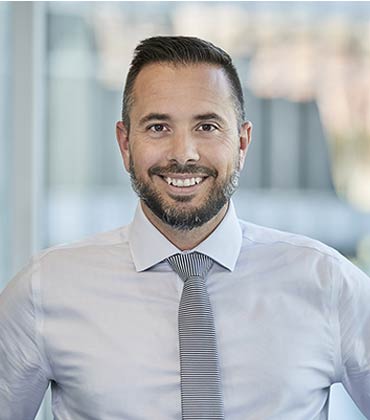
Martin Vermette
Martin Vermette is a transformation-focused HR leader who architects organizational capability at scale. As Vice President, Human Resources and Communication at Yoplait Liberté Canada, he leads the enterprise people agenda at a pivotal stage of growth and transformation.
His mandate extends well beyond traditional HR, integrating talent strategy, organizational design, leadership effectiveness, employee experience, total rewards, and corporate communications into a coherent system aligned to business performance. Under his leadership, HR operates as both a strategic function and a driver of culture, shaping how the organization executes, adapts, and performs. With his business-first approach, Martin builds highperforming organizations by ensuring alignment between strategy, structure, leadership, and culture, turning transformation into a sustained competitive advantage.
Instilling Confidence in Times of Change
On January 27, 2025, Yoplait Liberté Canada began one of the most significant transformations in its history as it transitioned from General Mills to the cooperative ownership of Sodiaal. More than a change in ownership, it marked a shift from a publicly traded, U.S.- led model to a farmer-owned cooperative rooted in purpose, product integrity, and long-term value creation. It also meant embracing a fundamentally different operating philosophy, one that puts the consumer first, values the quality and stewardship of milk, and prioritizes sustainable impact alongside performance.
In these moments, the leadership mandate shifts. Direction is necessary, but it’s not enough. Transition requires structural readiness, of course, but it demands presence, clarity, pace, and, above all, trust. For the leadership team, I prioritize radical transparency, ensuring that decisions are communicated and, most importantly, fully understood, including the trade-offs behind them. From my experience, confidence from employees does not erode because of change itself; it erodes when people cannot see the rationale that behind it.
In parallel, I anchor the organization in short-cycle wins. Transformation is inherently long-term, but progress must be visible in the near term. In team forums and monthly reviews, we deliberately surface tangible outcomes. These markers of progress restore a sense of control and reinforce forward momentum, even when the broader journey remains complex.
Proximity is equally critical. Leadership cannot operate at a distance in periods of transformation. It must be visible, engaged, and grounded in the day-to-day reality of the business—across plants, offices, and the field. Ultimately, confidence is earned when leadership demonstrates unwavering alignment between what is said, what is decided, and what is done, especially under pressure.
The Real Drivers of Organizational Speed
Looking back, several early decisions materially shaped our ability to operate with speed and discipline while fully leveraging the expertise of Sodiaal and Yoplait France.
The first was the establishment of a clear governance model. We defined decision rights across geographies and functions, reducing ambiguity and minimizing unnecessary escalation. Clarity is one of the strongest accelerators of organizational speed.
The second was a deliberate investment in our foundational architecture, particularly across HR and Finance. Before scaling, we aligned on the core building blocks: performance frameworks, compensation philosophy, and leadership expectations. This created the operating stability required to execute effectively in a dynamic environment.
The third was a fundamental reset of how we approach systems and processes. Rather than replicating legacy models, we used our SAP transformation to simplify and standardize ways of working end-to-end. I believe that speed does not come from applying more pressure, but from removing unnecessary complexity so people can execute with greater focus and agility.
“Confidence is earned when leadership demonstrates unwavering alignment between what is said, what is decided, and what is done, especially under pressure.”
Using Culture as a Force for Change
Culture proved to be a decisive lever in our transformation. When we initiated our Cultural Change workshops, we positioned them not as a branding exercise, but as a co-creation effort anchored in the cooperative principles of Sodiaal and the heritage of Yoplait France. Employees from diverse backgrounds and experiences came together to define, not receive, what we stand for.
From this process we aligned on four values: collaboration, be bold, consumer-centric, and excellence. We made sure they were not statements of intent. They became operational standards and function as a shared contract that directly informs how decisions are made and how performance is evaluated.
For leadership, the implications were immediate and non-negotiable: decisions must be anchored in values. This shift makes decision-making more explicit, reduces tolerance for misalignment, and establishes a consistent framework for action across the organization.
When values are clearly defined and collectively owned, they become a common language that empowers individuals to challenge behaviours, speak up with conviction, and take responsibility. For us, in this period of significant transformation, strong values became a powerful engine for alignment, agility, and organizational effectiveness.
Rethinking Talent for Long-Term Advantage
As we continued to evolve, another critical question emerged: how do we build the capabilities we need for the future? For me, the answer has never been a choice between reskilling existing employees and hiring new talent. It is a portfolio decision.
I consider three factors. The first is time to impact. When capabilities are urgent and mission-critical, we bring in external expertise or leverage partnerships. The second is cultural leverage. Internal talent carries institutional knowledge and embodies our values, making them essential for long-term continuity. The third is strategic differentiation. Some capabilities must be built internally because they define our future advantage.
This balanced approach allows us to remain agile while preserving the integrity of our culture.
The Leadership Philosophy behind Lasting Change
Throughout this journey, three principles have consistently guided our approach: purpose, performance, and pride. For me, they are not abstract ideals, rather, they must be tangible in the day-to-day experience of our people.
Purpose starts with connection. We anchor employees in the cooperative foundations of Sodiaal and in the values that define it: product integrity, responsible stewardship of milk, and consumer-first thinking. When people can clearly see how their work connects both to the dairy farmers who own the organization and to the consumers we serve, their roles take on deeper meaning.
Performance requires clarity and discipline. We set focused priorities and make key metrics visible across the organization. Whether it is revenue growth, operational excellence, or diversity outcomes, expectations are explicit, and progress is measurable. As for communication, transparency is not optional: it is the mechanism that drives alignment and accountability.
Pride comes from recognition. In high-demand environments, recognition must be intentional and visible. It is essential to celebrate milestones, whether opening a new office, delivering a critical phase of transformation, or launching a strategic initiative. These symbolic moments remind people that their efforts contribute to something tangible, and make the impact of their work visible across the organization.
Ultimately, the change become sustainable when three conditions are met: people see the outcome of their work, understand what truly matters, and feel recognized for their contribution. When these elements align, engagement is not driven—it is sustained.
If there is one conviction I carry forward, it is this: transformation is not a race for speed, it is a discipline of alignment. Organizations that succeed are those that move with clarity, operate with trust, and execute with shared purpose. When these conditions are in place, performance is not forced, it is unlocked. And the organization becomes more than a place of work; it becomes a place where people contribute, and truly belong.
The articles from these contributors are based on their personal expertise and viewpoints, and do not necessarily reflect the opinions of their employers or affiliated organizations.

Be first to read the latest tech news, Industry Leader's Insights, and CIO interviews of medium and large enterprises exclusively from Manage HR Magazine
