
A featured contribution from Leadership Perspectives: a curated forum reserved for leaders nominated by our subscribers and vetted by the Manage HR Advisory Board.

Prudential do Brasil
The Case for Corporate Wellness Initiatives

Alexandre Fegyveres
The importance of wellness, in all its dimensions, is well-documented by now. Considering that healthcare for many preventable conditions-like heart disease, smoking-induced cancers, Type 2 diabetes, obesity and even tooth decay—account for trillions of the United States’ annual health care expenditures, interventions to prevent and manage these conditions have significant economic benefits. Of course, some health risk factors are hereditary and cannot be modified, but there is strong evidence that education, access to a variety of wellness tools and personal discipline can change others.
While no single sector can solve these public health challenges on its own, employers can play leading roles in helping to improve wellness outcomes for their employees and communities at large.
“As organizations around the globe look to reduce costs and pursue sustainable development goals, many large companies have begun offering employee benefits apart from traditional medical care to address mental health, fertility, financial advisory services, and more.”
As organizations around the globe look to reduce costs and pursue sustainable development goals, many large companies have begun offering employee benefits apart from traditional medical care to address mental health, fertility, financial advisory services, and more. Incentives to reward physical exercise and achievement of dietary goals are also popular.
While providing access to such broad benefits is a positive development, what many companies fail to understand is that the pillars of wellness: mental, physical and financial, are highly interconnected. Financial stress has been known to manifest through symptoms including depression, anxiety, compromised immunity, depression and even heart arrhythmia. To be truly effective, wellness benefits should be offered as part of a highly personalized and holistic ecosystem, instead of in isolated clusters.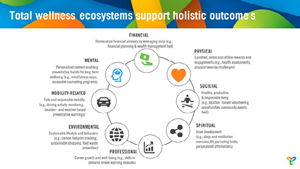
Through comprehensive wellness initiatives, employers have an unprecedented opportunity to help people live longer, healthier, happier lives, and to reduce societal burdens associated with preventable disease while achieving long-term profitability. Research shows these programs work, as they empower users to look after multiple aspects of their own wellbeing. Such programs are also quickly becoming table stakes in a post-pandemic the war for talent.
Digital platforms support scalability, seamless user experiences
Technology is an optimal way of delivering corporate wellness programs to diverse populations, and making them scalable, accessible and fun to engage in. A digital platform that offers broad resources and rewards through a unified, seamless experience, can also generate valuable data, providing insights that help create a more personalized experience for users and measure the success of wellness programs.
The potential to support even greater employee wellbeing through holistic wellness ecosystems is tremendous, and could include:
• Encouraging safe and responsible mobility through driving activity monitoring and weather-based preventative warnings;
• Rewarding sustainable lifestyle behaviors such as food waste prevention and carbon footprint tracking;
• Promoting professional career growth through skills training; and
• Supporting spiritual development through sleep and meditation exercises or journaling tasks
Employers who prioritize employee wellbeing stand the best chance of achieving the benefits wellness programs offer: healthier, happier, more productive employees whose physical and emotional health may lead to lower rates of absenteeism, fewer delayed retirements, and reduced levels of employee turnover, healthcare costs and employee disability.
The articles from these contributors are based on their personal expertise and viewpoints, and do not necessarily reflect the opinions of their employers or affiliated organizations.

Be first to read the latest tech news, Industry Leader's Insights, and CIO interviews of medium and large enterprises exclusively from Manage HR Magazine
