
A featured contribution from Leadership Perspectives: a curated forum reserved for leaders nominated by our subscribers and vetted by the Manage HR Advisory Board.

Gulf International Bank
Learning and Talent Management at the Intersection of Leadership, Capability Building, and AI
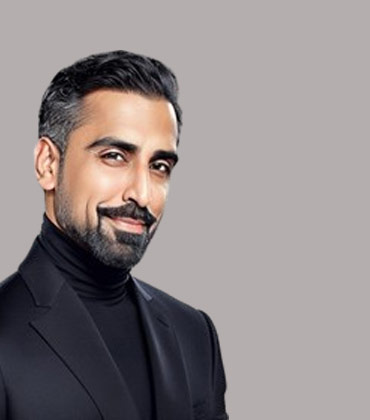
Syed Hashim (MCIPD)
Syed Hashim is learning and talent Management leader who helps organizations adapt in times of constant change. He focuses on strengthening leadership, building future-ready capabilities, and thoughtfully integrating AI into people strategies. Grounded in business realities and human judgment, he champions development approaches that balance innovation with ethics, purpose, and long-term organizational resilience.
Elevating L&TM to the Center of Organizational Change
Learning and Talent Management is undergoing a fundamental repositioning. No longer confined to developing skills or managing career pathways, it is increasingly being called upon to shape how organizations lead, adapt, and sustain performance in an environment defined by continuous disruption. This shift has elevated L&TM to a strategic intersection, where leadership effectiveness, capability building and emerging technologies such as artificial intelligence converge.
As organizations accelerate transformation agendas, the role of leadership has become more complex. Leaders are expected to navigate ambiguity, balance speed with judgment, and make decisions informed by both human insight and data-driven intelligence. At the same time, capability requirements are evolving faster than traditional learning models can accommodate, while AI is reshaping not only how work is done, but how talent is identified, developed and deployed.
In this context, the true mandate of Learning and Talent Management is no longer about delivering programs, but about enabling readiness, building leaders who can work alongside intelligent systems, fostering capabilities that remain relevant over time, and ensuring that technological advancement strengthens rather than erodes the human core of organizations. It is at this intersection that L&TM can create its greatest impact on enterprise transformation.
Building Adaptive Leadership in an AI-Driven Enterprise
My focus on the evolving role of Learning and Talent Management (L&TM) has been shaped by observing a consistent pattern across organizations: transformation efforts often falter not due to lack of strategy or technology, but because people systems are not equipped to evolve at the same pace as the business. As organizations face constant disruption, learning and talent functions can no longer operate as support mechanisms; they must act as strategic enablers of enterprise change.
Leadership sits at the centre of this evolution. Today’s leaders are expected to navigate ambiguity, make high-impact decisions under uncertainty, and lead diverse, digitally enabled workforces. This places L&TM at a critical intersection where leadership development, capability building, and organizational readiness converge to drive sustainable transformation.
"Alignment comes from an ongoing partnership with the business rather than one-time needs assessments."
AI and advanced technologies are fundamentally reshaping how organizations approach capability building. One of the most significant shifts is the move away from standardized learning models toward more personalized and adaptive development pathways. Capabilities can now be built based on role criticality, readiness, and future potential rather than static job structures. In leadership development, the impact is even more pronounced. AI is changing not only how leaders learn, but what they must learn. Effective leadership today requires the ability to work alongside intelligent systems, interpreting insights, exercising ethical judgment, and remaining accountable for decisions informed by data and algorithms. These capabilities go beyond technical proficiency; they demand maturity, discernment, and a strong human core.
However, technology alone does not create impact. The real value emerges when AI is integrated thoughtfully within human-centered development strategies. Learning and talent functions must ensure that technology enhances judgment rather than replaces it, and that leaders remain grounded in responsibility, trust, and purpose.
Integrating Technology, Strategy, and Human Development
The modern L&TM leader requires a blend of strategic, digital, and human capabilities. Strategic acumen is essential, understanding business priorities, anticipating future capability needs, and aligning talent initiatives to measurable outcomes. Without this alignment, learning risks becoming activity-driven rather than impact-driven.
System thinking is equally critical. Learning, talent management, performance, succession, and workforce planning must operate as an integrated ecosystem rather than isolated processes. Leaders who can design and connect these systems are far better positioned to enable transformation at scale. Digital fluency has also become non-negotiable. While L&TM leaders need not be technologists, they must engage confidently with data, platforms, and AI-enabled solutions, asking the right questions around ethics, bias, governance, and long-term sustainability. Above all, strong change leadership and influencing skills are required to challenge legacy practices and bring senior stakeholders along the transformation journey.
As organizational transformation accelerates, learning and talent functions face growing pressure to demonstrate tangible business impact. Traditional measures such as participation rates or satisfaction scores are no longer sufficient. Stakeholders increasingly expect evidence of readiness, performance improvement, and leadership effectiveness.
Another key challenge lies in balancing speed with sustainability. Organizations are racing to reskill their workforces, but poorly designed interventions risk creating superficial capability or change fatigue. L&TM functions must therefore ensure depth, relevance, and long-term value while remaining agile. Finally, fragmentation remains a persistent obstacle. In many organizations, learning, talent, digital, and transformation initiatives operate in silos. True impact requires tighter integration, shared ownership, and a unified narrative that connects people development directly to enterprise outcomes.
Bridging Human Judgment and Digital Innovation
For professionals aspiring to lead at the intersection of learning, talent management, and digital innovation, my first piece of advice is to anchor your work firmly in the business. Understanding how value is created within your organization will allow you to position learning and talent as strategic enablers rather than functional offerings. Second, invest equally in human and technological understanding. The future belongs to those who can bridge both worlds, leveraging technology while preserving judgment, empathy, and ethical responsibility.
Finally, remain grounded in purpose. Amid rapid change and technological advancement, the role of Learning and Talent Management remains fundamentally human: enabling people to grow, adapt, and contribute meaningfully. Leaders who keep this perspective at the centre will be best equipped to shape the future of the profession.
The articles from these contributors are based on their personal expertise and viewpoints, and do not necessarily reflect the opinions of their employers or affiliated organizations.

Be first to read the latest tech news, Industry Leader's Insights, and CIO interviews of medium and large enterprises exclusively from Manage HR Magazine
