
A featured contribution from Leadership Perspectives: a curated forum reserved for leaders nominated by our subscribers and vetted by the Manage HR Advisory Board.

Edwards Vacuum
Respect Creates Respect: Turning Inclusion into Everyday Business Practice
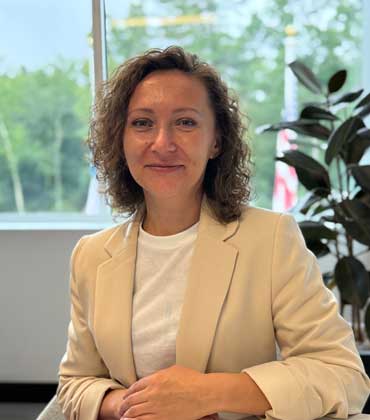
Olga Sidyakina
Organizations today face increasing pressure to drive performance while navigating talent shortages, workforce transformation, and rapidly changing employee expectations. In this environment, culture is no longer “nice to have.” It is a strategic business asset.
One of the most powerful lessons I have learned throughout my HR career is that high-performing organizations are built on a foundation of respect. Respect shapes how decisions are made, how teams collaborate, and ultimately, how people perform. It also creates the conditions necessary for inclusion, innovation, and sustainable growth.
This belief was reinforced during the implementation of our local Respect Creates Respect initiative at Haverhill, where we focused on translating global values into meaningful daily experiences for employees through learning opportunities, engagement activities, recognition, social connection, and local culture ambassadors.
Inclusion Is a Business Imperative
For many organizations, discussions about inclusion often begin with representation metrics. While representation is important, I believe the real challenge lies elsewhere: creating an environment where people feel comfortable contributing their ideas, challenging assumptions, and bringing their authentic perspectives to work.
Inclusion enables a broader range of experiences and viewpoints to be heard.
When employees feel respected and psychologically safe, collaboration becomes stronger, decision-making improves, and teams become more adaptable in the face of change. Inclusive environments allow organizations to leverage the full potential of their workforce rather than relying on a narrow range of perspectives.
This is why I increasingly view inclusion not as a standalone HR initiative, but as a performance driver. Organizations that successfully create inclusive cultures are better positioned to innovate, solve complex problems, and respond to evolving business demands.
Making Culture Visible
A common challenge for HR leaders is moving culture from aspiration to action.
Most organizations have clearly defined values. However, employees do not experience culture through statements on a website or posters on a wall. They experience it through daily interactions, leadership behaviors, and workplace practices.
One reason our Respect Creates Respect initiative resonated locally was that we focused on making culture visible and relatable. Rather than relying solely on corporate messaging, we incorporated local employees, workspaces, and site-specific experiences into the campaign. Customized communications, employee champions, informal discussions, and shared activities helped employees see themselves reflected in the culture we were trying to build.
The result was not simply greater awareness of the campaign. It created more opportunities for conversation, connection, and personal ownership.
Culture becomes meaningful when employees see their role within it.
The Critical Role of Connection
One area that deserves greater attention in today’s workplace is social connectedness.
As organizations become more global, matrixed, and functionally specialized, employees often have fewer opportunities to build relationships outside their immediate teams. Yet strong workplace relationships remain powerful drivers of engagement, collaboration, and trust.
Through our initiative, we intentionally created opportunities for employees from different functions to connect in informal settings and strengthen relationships beyond traditional reporting structures. These interactions helped break down silos and encouraged greater understanding between teams.
“Respect shapes how decisions are made, how teams collaborate, and ultimately, how people perform. It also creates the conditions necessary for inclusion, innovation, and sustainable growth.”
From my perspective, inclusion is fundamentally about connection. When people understand one another’s experiences, challenges, and contributions, collaboration becomes easier and respect becomes more natural.
Addressing Bias for Better Decisions
Creating an inclusive culture also requires organizations to recognize and address bias.
Bias is a natural part of human decision-making, but when left unchecked, it can influence hiring practices, talent development, succession planning, and everyday workplace interactions. Even unintentional bias can limit opportunities, erode trust, and prevent organizations from fully benefiting from the diversity of their workforce.
For HR leaders, mitigating bias is about creating awareness and improving decision quality. It requires encouraging reflection, challenging assumptions, and establishing processes that support fair and objective talent decisions.
Importantly, bias mitigation is not about assigning blame. It is about ensuring that talent, performance, and potential are recognized consistently and equitably.
When people trust that opportunities are accessible and decisions are fair, engagement and commitment naturally increase.
Leading Culture Through Everyday Actions
Perhaps the most important lesson from our experience is that culture is not created through a single campaign, event, or communication strategy.
Culture is shaped by thousands of daily interactions.
While initiatives can provide direction and momentum, sustainable change occurs when leaders consistently model respectful behaviors, managers create inclusive team environments, and employees hold themselves accountable for how they treat one another.
HR can facilitate the conversation, provide tools, and create opportunities. However, a culture of respect is ultimately built collectively.
As organizations continue to navigate uncertainty and transformation, one principle remains constant: people perform at their best when they feel respected.
When respect becomes part of everyday behavior, inclusion is no longer a program. It becomes a natural part of how the organization operates, how people collaborate, and how success is achieved.
The articles from these contributors are based on their personal expertise and viewpoints, and do not necessarily reflect the opinions of their employers or affiliated organizations.

Be first to read the latest tech news, Industry Leader's Insights, and CIO interviews of medium and large enterprises exclusively from Manage HR Magazine
