
A featured contribution from Leadership Perspectives: a curated forum reserved for leaders nominated by our subscribers and vetted by the Manage HR Advisory Board.


Nicholas Tuma
For more than a decade, I have worked in human resources in competitive, rapidly changing markets. Today, I lead regional HR strategy in multiple countries, with responsibilities spanning talent acquisition, employee development, performance management, engagement and retention and, perhaps most importantly, helping organizations identify which new employees are worth investing in before they begin their growth up the business ladder.
That experience has convinced me that one of the most serious workforce problems facing companies today is often recognized too late. The real problem is not the current vacant position, but the capability gap that existed before the position became vacant.
The solution is to stop treating recruitment as the answer to an immediate vacancy and start looking at talent development as an investment in what the company will need next. Through my work and experience, I have found that this requires six connected steps:
Anticipate. Build. Expose. Transfer. Entrust. Measure.
These six steps are cumulative components. Anticipate the capabilities the business will need.
Build a pipeline of people who can develop those capabilities. Expose them to the experiences that prepare them for greater responsibility. Transfer the knowledge they will need to succeed. Entrust them with real responsibility when they are ready. Then measure whether that investment is producing advancement and greater capability within the organization. The process is all about planning.
Anticipate What the Business Will Need
The first step is to look beyond the positions a company needs to fill today and anticipate the capabilities it will require tomorrow.
That means asking different questions. Which jobs are likely to change because of automation, artificial intelligence or other technologies? Which technical, digital and leadership capabilities will become more important as the business grows? And, just as importantly, which employees already within the organization have the potential to develop those capabilities?
This redefines workforce planning from a company “headcount” to identifying what employees can deliver in the anticipated future. It also gives a company something it cannot buy back once a critical vacancy occurs: TIME. Waiting until a position is vacant turns talent development into a race against the clock. Anticipating the need allows a company to prepare for advancement.
When future capability needs are identified early, there is time to recruit promising candidates, develop employees' existing skills, provide appropriate and necessary experience and begin transferring that knowledge before the need becomes urgent.
Build the Pipeline Before You Need It
Building a talent pipeline must start early! Once a company identifies the capabilities it will need, the next challenge is finding and developing that talent.
Universities and technical institutions are a natural place to begin investing in a company's future workforce. Developing partnerships can give companies a head start. Internships can allow companies to identify talent early, see how individuals perform within the company culture, and begin developing those who show future potential as full-time employees.
I have seen the value of this approach firsthand. In one operation where I helped develop a structured internship program, approximately 80 percent of the interns went on to employment. The program’s success was not measured by the number of interns who participated, but by the interns who successfully moved into the workforce as employees.
Expose Employees to the Experience They Need
Training provides knowledge. Experience develops capability.
Employees identified for advancement need opportunities to put their skills to work and assume greater responsibility. That experience may come from a more challenging assignment, another area of business or moving a local company employee to an international opportunity.
I have seen the results firsthand. In one workforce-development program, four local employees received international development opportunities to gain experience unavailable in their home operation. Four others advanced into workshop supervisory positions, while another four moved into offshore job-lead roles.
The progression from training to experience is what begins turning employee potential into readiness for greater responsibility.
| 80 percent | 4 | 4 | 4 |
|
Internship → employment conversion
|
International development exposure | Progressed into workshop supervisory roles | Developed into offshore job-lead roles |
Figure 1. What capability development looks like in practice: progression, exposure and movement into greater responsibility.
Transfer Knowledge Deliberately
Developing talent means making sure knowledge is shared from one employee to another. While mentoring is valuable, the goal is for the developing employee to eventually perform the work independently.
Entrust People with Responsibility
At some point, development requires trust. A company can train and prepare an employee for advancement, but eventually that person must be permitted to lead, make decisions and take responsibility for the outcome.
That does not mean putting someone into a position before they are ready. It means allowing a prepared employee to prove what they can do, with support available when needed.
I have seen the results of such an investment. In one operation, the percentage of jobs filled by employees from the local workforce grew from 44 percent to 50 percent, reducing the need to bring in professionals from outside the region.
For me, the real measure of success was seeing employees we had prepared move into positions of greater responsibility and succeed.
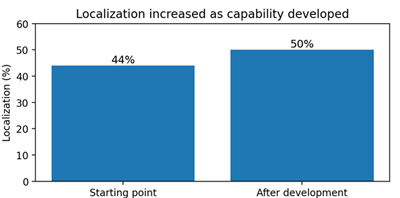
Figure 2. Localization is the visible outcome. Capability development is what sits underneath it.
Measure Progress, Not Participation
The ultimate step is measuring results. Training attendance, internships and mentoring programs measure participation, but not necessarily progress.
What happens next is what matters. Did interns become employees? Did employees advance to positions of greater responsibility? And who are the new mentors?
A company’s future workforce depends on the people it hires and develops today. A new hire may become a supervisor, a technical expert, a mentor or a future leader. Recognizing that potential early and investing in it is how companies prepare for success.
About the Author
Nicholas Tuma is a human resources professional with more than a decade of experience navigating competitive global markets. His expertise includes employee relations, performance management, training and development, talent acquisition, employee engagement and retention. Today, he leads regional HR strategy across multiple countries, helping organizations identify and develop employees for greater responsibility and future leadership. Originally from Jinja, Uganda, Tuma currently resides in Sugarland, Texas.
The articles from these contributors are based on their personal expertise and viewpoints, and do not necessarily reflect the opinions of their employers or affiliated organizations.
