
A featured contribution from Leadership Perspectives: a curated forum reserved for leaders nominated by our subscribers and vetted by the Manage HR Advisory Board.

Human Resources Director at JGB S.A.
Navigating Paradoxes
Sandra Valentina Rivillas Garzon
Looking back on the last few years and particularly the 2020s, a rollercoaster of unexpected experiences emerges before us. We have experienced a series of risks that we never imagined living through.
With just three years of excessive turbulence caused by extreme crises such as the COVID-19 pandemic, the war in Ukraine, the commodities crisis, excessive political polarization, and major catastrophes from fires or earthquakes, among others, it's impossible not to be amazed by the world's resilience in bouncing back swiftly.
We must recognize that technology and science have been key elements in managing and mitigating these phenomena. However, what generates the most admiration for me is seeing the human ability to navigate through paradoxes.
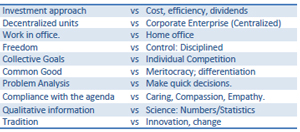 ‘Navigating paradoxes’ implies the ability to move with flexibility and understanding in a world full of contradictions and complexities, recognizing that reality is often more nuanced than it appears at first glance. It's the ability to find the balance point between two opposites that could be equally defensible, understanding that there is no absolute truth and choosing how to place oneself in the right place to balance opposing concepts.
Today, every day we must navigate some paradoxes such as:
More and more, it's necessary to handle complex or ambiguous realities in short periods. Therefore, the talent that will make organizations successful and sustainable will be the individuals capable of skillfully navigating between paradoxes, those who know how to find the balance between opposing points.
“The talent that will make organizations successful and sustainable will be the individuals capable of skillfully navigating between paradoxes, those who know how to find the balance between opposing points.”
These individuals require a combination of cognitive, emotional and philosophical skills that allow them to embrace complexity, ambiguity and contradiction through a high capacity for active listening, mental flexibility, continuous critical thinking, a significant dose of empathy, and resilience to shed unnecessary paradigms and create useful conceptual frameworks for understanding and reconciling paradoxes.
If you have talent with these characteristics, please motivate and preserve them, and if possible, attract many others. They will be key to ensuring organizational success.
The articles from these contributors are based on their personal expertise and viewpoints, and do not necessarily reflect the opinions of their employers or affiliated organizations.

Be first to read the latest tech news, Industry Leader's Insights, and CIO interviews of medium and large enterprises exclusively from Manage HR Magazine
