
A featured contribution from Leadership Perspectives: a curated forum reserved for leaders nominated by our subscribers and vetted by the Manage HR Advisory Board.

Bank CIMB Niaga Indonesia
Artificial Intelligence (AI) Powered Virtual Reality (VR) Learning
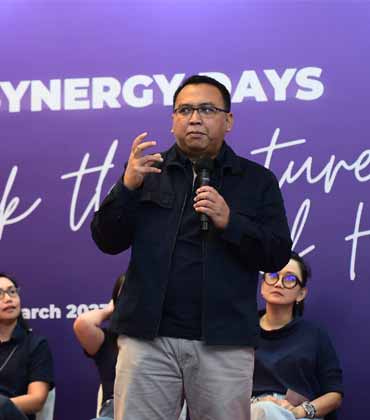
Muhammad Shodiq
Artificial Intelligence (AI) refers to the simulation of human intelligence processes by machines, particularly computer systems. These processes include learning - the ability to improve performance based on experience; reasoning - the ability to make decisions; problem-solving, perception-recognizing objects or patterns; language understanding, and potentially even creativity. AI systems are typically designed to perform specific tasks or mimic human behavior in various ways. AI technologies include various techniques such as
• Machine Learning (ML): A subset of AI that enables systems to learn from data and improve their performance over time without explicit programming. It includes supervised learning, unsupervised learning, and reinforcement learning.
• Natural Language Processing (NLP): Enables machines to understand, interpret, and generate human language, allowing for applications like chatbots, translation tools, and sentiment analysis.
• Computer Vision: The ability of machines to interpret and make decisions based on visual input from the world, like recognizing faces or objects in images.
• Robotics: The application of AI to control robots, which can carry out tasks ranging from assembly line work to complex operations in healthcare or space exploration.
AI is increasingly integrated into various industries, from healthcare and finance to entertainment and transportation, reshaping how we live, work, and interact.
VR (Virtual Reality) learning refers to the use of immersive, computer-generated environments where learners interact with 3D simulations to experience and engage in educational activities. Unlike traditional classroom learning, VR learning enables students to be “immersed” in a virtual world that replicates real-world or fantastical scenarios, providing hands-on experiences in a controlled and interactive setting. In summary, VR learning is an innovative educational approach that leverages virtual environments to provide interactive, immersive learning experiences. It holds great potential for enhancing education, though there are challenges related to cost, accessibility, and content development.
“Overuse of VR and AI tools might lead to a reduction in traditional face-to-face learning interactions, which are essential for developing soft skills like communication, teamwork, and empathy.”
AI-powered VR learning combines the immersive power of VR with the intelligent capabilities of AI to create interactive, adaptive, and personalized educational experiences. This emerging technology offers several benefits, but it also faces a range of challenges. The development of VR AI Learning with voice recognition, speech output, and an animated avatar represents the next stage in AI-powered virtual interactions. By combining Speech-to-Text, GPT-based AI, Text-to-Speech, and AI-driven animated characters, we can create highly immersive conversational experiences, enhance user engagement and accessibility and more lifelike, bringing them closer to a world where human-computer interaction feels truly natural and seamless. There are at least 5 (five) benefits of AI-based VR Learning.
1. Personalized Learning Experience: AI can adapt the VR environment to cater to individual learning styles and needs. For instance, it can adjust the pace, complexity, and type of content based on a student’s performance, offering a tailored educational experience.
2. Immersive Learning: VR creates an engaging and realistic learning environment, making abstract or complex concepts easier to understand. Students can practice skills in simulated real-world environments, such as surgery, engineering, or historical sites, which would be difficult or impossible to replicate in a traditional classroom.
3. Enhanced Engagement and Motivation: The interactive nature of VR combined with AI’s ability to create dynamic scenarios can keep learners engaged. VR’s immersive experience makes learning more fun and can increase motivation, especially in subjects that students find challenging.
4. Real-time Feedback and Assessment: AI can analyze a learner’s actions within the VR environment and provide instant feedback on their performance. This helps learners to identify areas for improvement immediately, which accelerates the learning process.
5. A Safe Learning Environment: VR allows learners to practice high-risk activities (e.g., medical procedures, industrial machinery operation) in a controlled, risk-free setting, minimizing the danger to people and property.
VR and AI can make education more accessible by offering virtual field trips and remote learning environments and providing opportunities for learners with disabilities. For example, AI-powered VR can provide voice guidance, subtitles, or alternative input methods for students with special needs.
However, there are some challenges of AI-powered VR learning.
1. Investment Cost: The initial investment required for AI and VR technologies can be prohibitive for educational institutions, especially in low-resource settings. The cost of VR headsets, AI software, and content development may limit its widespread adoption.
2. Technological Accessibility & Technical Limitation: Not all students may have access to the necessary hardware or high-speed internet connections required for VR learning. This can create a digital divide, especially in rural or economically disadvantaged areas. The technology behind AI-based VR learning is still evolving. Current VR headsets can be bulky and uncomfortable and may cause motion sickness in some users. Additionally, AI algorithms are still being refined, and there may be limitations in how well they can accurately adapt to all learners.
3. Data Privacy and Security: The integration of AI and VR in education requires the collection of large amounts of data, including students’ behavioral and learning patterns. This raises concerns about data privacy and the potential for misuse of sensitive information.
4. Change Management: For AI-based VR learning to be effective, teachers need to be trained in how to incorporate these technologies into their teaching methods. There may be resistance to change or a lack of readiness among educators to embrace new technology.
Overuse of VR and AI tools might lead to a reduction in traditional face-to-face learning interactions, which are essential for developing soft skills like communication, teamwork, and empathy. Balancing technology with human interaction is important.
AI-powered VR learning has the potential to revolutionize education by providing personalized, immersive, and engaging learning experiences. However, its implementation comes with significant challenges, including cost, accessibility, and data privacy concerns. The key to success will be addressing these issues while leveraging the unique benefits of AI and VR to enhance educational outcomes.
The articles from these contributors are based on their personal expertise and viewpoints, and do not necessarily reflect the opinions of their employers or affiliated organizations.

Be first to read the latest tech news, Industry Leader's Insights, and CIO interviews of medium and large enterprises exclusively from Manage HR Magazine
