
A featured contribution from Leadership Perspectives: a curated forum reserved for leaders nominated by our subscribers and vetted by the Manage HR Advisory Board.

Wren Kitchens
Building People Operations around the Business
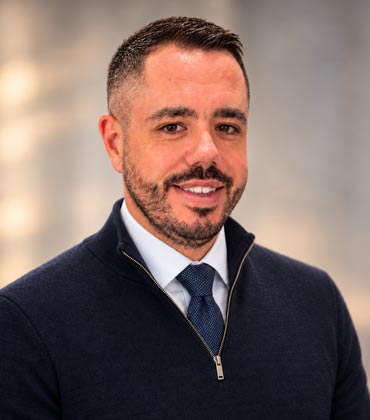
Luke Dolan
Understanding the Business behind HR
My progression into senior HR leadership has shaped one principle more than anything else: HR has to understand how the business actually works.
It is easy for People functions to become focused on their own processes, policies or priorities. However, as my career has developed, I have become increasingly interested in the opposite approach – starting with what the business is trying to achieve, understanding the operational challenges behind it and then asking how HR can make that easier.
That means thinking beyond individual HR activities and looking at the whole picture. Recruitment, employee relations, HR systems, workforce planning, manager capability, data and service delivery are all connected. If one area creates unnecessary friction, the impact is usually felt somewhere else in the business.
For me, that is where People Operations has an important role to play.
I believe HR should be managed with the same operational discipline as any other business function. We should understand our demand, capacity, service levels, bottlenecks and performance. We should know where our managers are losing time, where processes create unnecessary work and whether our systems are helping people do their jobs or simply getting in the way.
HR becomes genuinely strategic when it understands those things and uses them to make the business work better.
Connecting People Strategy to Operational Reality
The employment environments, labour markets and cultural expectations can be very different, and it quickly teaches you that there is no single HR playbook that can simply be transferred from one country to another. You have to understand the environment you are operating in.
“I believe HR should be managed with the same operational discipline as any other business function.”
At the same time, many of the fundamentals remain consistent. Employees want clarity about what is expected of them, managers need the confidence and capability to make good people decisions, and people teams need to understand what the business is trying to achieve rather than operating separately from it.
I started my early career on the frontline in retail management, and that experience has been particularly influential. A process can look perfectly logical when it is designed from Head Office, but the real test is what happens when a manager or employee has to use it in a busy operational environment. That is why I think People leaders have to stay close to the reality of the business.
That experience has also shaped how I think about engagement and workforce planning. Engagement is not just about surveys or initiatives. It is often influenced by the everyday experience people have of their manager, their workload, the systems they use and whether they feel listened to. Workforce planning similarly needs to go beyond headcount. It is about understanding when demand occurs, what capability is required and making sure the right people and skills are available where they can have the greatest impact.
The same principle applies to recruitment. Filling vacancies matters, but businesses need to look further than traditional recruitment measures. Are we hiring the right people? How quickly do they become productive? Do they stay? Are we building capability for where the business is going rather than simply replacing the person who has left? Those questions create a much stronger link between recruitment and business performance.
Using Data to Strengthen Business Performance
Data is an important part, but I don’t think the answer is to measure everything simply because we can. Good people data should help somebody make a better decision.
If a metric tells us that demand is increasing or that something is not working as it should, the important question is what we do differently as a result. Ultimately, my approach to building stronger teams comes down to three things: clarity, capability and accountability.
People need clarity about what good performance looks like and how their role contributes to the wider business. Managers need the capability and confidence to lead their teams effectively. HR should support managers, but we should be careful not to create a model where every difficult conversation or people decision is automatically handed over to HR. Strong business builds strong managers.
And finally, there has to be accountability. Expectations need to mean something, whether they relate to performance, behaviour, leadership or delivery.
Building People Functions That Reduce Complexity
People need systems they can rely on, processes that are straightforward and an HR service they trust. One of the most important responsibilities for people leaders is therefore to challenge complexity. We should continually ask whether a process still serves a purpose, whether a policy is understandable and whether something could be made easier for the people who actually have to use it.
For me, the future of HR is not about creating more HR. It is about building People functions that combine good judgement and a genuine understanding of people with operational discipline and commercial awareness – creating the foundations that allow businesses to grow sustainably.
When we understand the business, equip managers properly, use data intelligently and remove unnecessary friction, HR becomes much more than a support function. It becomes part of how the business performs.
The articles from these contributors are based on their personal expertise and viewpoints, and do not necessarily reflect the opinions of their employers or affiliated organizations.

Be first to read the latest tech news, Industry Leader's Insights, and CIO interviews of medium and large enterprises exclusively from Manage HR Magazine
