
A featured contribution from Leadership Perspectives: a curated forum reserved for leaders nominated by our subscribers and vetted by the Manage HR Advisory Board.

Al Habtoor City Hotel Collection
Leadership Development: It takes a Leader to create a leader

Charbel El Khoury
When I hear the word "Leadership," the first thing that comes to mind is Serving others and guiding them to becoming successful. It is a great opportunity yet a HUGE Responsibility as well. To develop potential talents into future leaders, we need to have a leadership mindset and be role models, but are we?
Hi, This is Charbel el Khoury, Currently Complex Director of Learning and Development at Hilton Dubai Al Habtoor city. Thank you for allowing me to share with you what makes a "Leadership mindset," in my opinion. Honestly, it consists of many elements, but I shall speak of some of my favorites:
Aligning teams with company culture, employees want to know why their work matters and why they are even at work. We should give them a PURPOSE to come to work every day and take pride in what they do.
In order to create a collaborative team, we need to rally them around a common purpose. The purpose is a hot topic in leadership, and as per Proctor and Gamble, "Purpose" drives organizations to outperform the market by up to 350%. Organizations that don't have a Vision, Mission, or Values that lead and put the team on the same Universal service standards and code of ethics will not succeed. Leaders are to be Ambassadors of what true leadership is all about and must be aligned with the company culture.
Showing Empathy
Most leaders develop a JUDGING attitude which is justified in some areas. However, we tend to keep the "Feeling" side locked away in a drawer. Emotional intelligence is key to controlling strong emotions and being self-aware for leaders to succeed. John Maxwell once said
"Leaders touch a heart before they ask for a hand."
We have to connect with people before we can ask them for help, and that's where empathy comes in. Leaders should care about their team members' problems, issues, challenges and what demotivates them. Even in their personal life, coaching can be advised since it can affect their work or, even worse… affect them as human beings.
People can feel empathy on a physical level. The studies tell us that 78% of what we interpret from another person comes from their tone of voice, their body language and their facial expressions. So when you express empathy, you are forging a really strong connection with the people on your team. So to make it simple, just have the will to want to understand your employees and empathize with their feelings no matter how different they might be from you. Leaders should be open to listening and showing that they care. Then they can give their opinion, which doesn't mean they have to feel their feelings or be responsible.
Time Management:
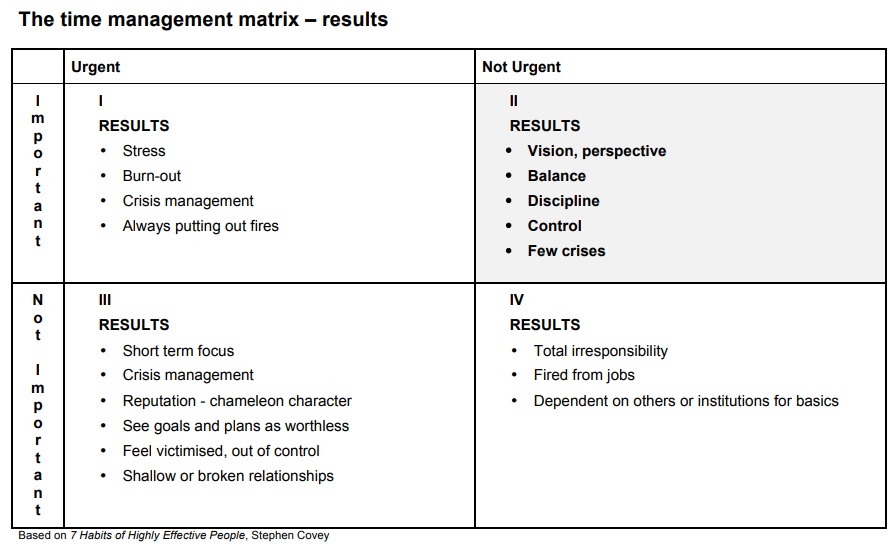
A leader is one who is visible all over the place and an excellent time manager. One of my favorite Charts of Time Management is Steven Covey's Interpretation, where he splits tasks based on IMPORTANCE VS URGENCY.
A leader is one who is PROACTIVE enough to be able to spend most of his time working on IMPORTANT TASKS but before they get urgent.
“We should give them a PURPOSE to come to work every day and take pride in what they do.”
Spending a lot of time in the URGENT zone can wreck nerves and health and lead to bad decisions. Urgent tasks that are not important can be delegated and should not allow the leader to have his time stolen from him.
Self Awareness
A true leader should always be open to feedback and learning. There are many challenges along the road, and self-awareness is key for self-evaluation and development.
Below are some questions that come to mind:
- How do I lead a team who is in trouble?
- How do I end a team drama and navigate the team through change?
- How do I make the team BELIEVE in me so they all work together towards the fixed goal? (And speaking about Goals…):
- How good am I at setting reasonable objectives for my team to achieve?
- Do I know their talents?
- Do I care to develop a one to one relation ( especially with those who report directly to me)
- Do I Know Performance Management, and do I award the ones who deserve it based on facts and figures?
- Are we recruiting talented and potential talents?
The list does not end… but to sum it up… one question comes to mind:
"Am I doing the best I can to help anyone who knocks on my door for advice?" plus, "Am I working on myself to always develop, learn and improve so I help others follow the same"?
In the end, Leadership development is not a "task" or a "training session" that we just give… It is a WAY OF LIFE where people are inspired by how you work
The articles from these contributors are based on their personal expertise and viewpoints, and do not necessarily reflect the opinions of their employers or affiliated organizations.

Be first to read the latest tech news, Industry Leader's Insights, and CIO interviews of medium and large enterprises exclusively from Manage HR Magazine
