
A featured contribution from Leadership Perspectives: a curated forum reserved for leaders nominated by our subscribers and vetted by the Manage HR Advisory Board.

Vice President and Global Head of Human Resources at IAMGOLD
Leadership Development In and Beyond HR
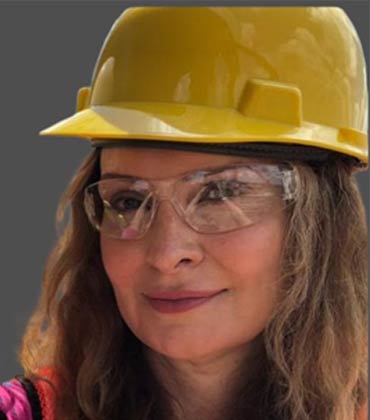
Dorena Erika Quinn
With over 20 plus years of experience in international roles including Mining, Broadcast Measurement, Telecom, Financial Services, and Investment Banking, Dorena Erika Quinn is the Vice President and Global Head of Human Resources at IAMGOLD. She is experienced in areas such as DEI, Strategic Change Leadership, Culture Change, Talent Management, Mergers and Acquisitions, Project Management and Employee Communications. She is most recognized for consultative leadership to engage teams, stakeholders and in building sustainable programs. In an exclusive interview with Canada Leadership Development 2022, Dorena Erika Quinn shared her valuable insights on leadership development in HR.
Could you tell us about yourself and the experiences you've had?
I have been in HR for over 25 years and have worked for international organizations and Fortune 500 companies. I have a multidisciplinary portfolio and incline leadership development, coaching, and strategic and operational effectiveness. I have been working for IAMGOLD for four years as the global head of HR, and I have been leading the digital journey, developing key leaders into the future to keep up with both attraction and retention issues impacting our sector.
What is essential for leaders in the HR space currently?
There are critical processes for leadership development, but they need to be embedded seamlessly with expected behaviors. Leadership development does not occur without the correct business model, which is an integrated model. An integrated approach that works for the organization is critical. The business maturity model has to be evaluated before embarking on anything related to leadership development. The maturity model impacts the benefits of implementing a new process, behavior, or structure. The impact of doing this is to ensure an enhancement to the current organization. Having a diagnostic as a starting point would be helpful for any organization.
What are some new up-and-coming trends in leadership development strategies and processes? What challenges do the companies face in effectively implementing these processes?
Digitization and asynchronous leadership development is a trend that is currently flourishing and got accelerated with COVID-19. The need for on-demand learning services, which are very much in line with how we consume information as individuals, is another trend that continues to emerge. The element of user experience is alive, and we see that from the feedback we get, even from our leaders. One of the challenges relating to this is that it is passive learning. Through my experience, I have learned that there's a benefit to being present in a physical space and sharing experiences in a safe setting, which can be lost through online platforms. This will continue to be a challenge, along with time. Many leaders are looking for quick fixes on how to get things right. However, leadership development is about the experiential learning experience. Immersing ourselves in that blended environment can overcome that challenge.
What do you look for when you seek out C-suite executives? What are the characteristics you look for in a leader?
We want someone with strategic acumen, leadership, and the ability to motivate others to bring the teams along. Some critical elements are required by different organizations for C-suite hires. There are many 'vanilla competencies' for C-suites, and I think it's essential to be specific, based on the role, about what success looks like. I invite these conversations with the board and with other leaders, President and CEO alike, to define what 'best' is for their organization.
How has the popularity of the remote work culture impacted the leadership development space?
The remote work culture has pushed this need to have on-demand or digital acceleration of learning and has pushed us to get creative with what leadership development looks like. Many traditional learning models, such as job training, formal training, and coaching, shifted with technology. We have these artificial barriers, such as online communication means through which we must pick up all the non-verbal cues and look for learning opportunities with students. Several organizations have been doing this well for years, and it is incumbent on us, as we are new to this space, to adopt the learning to resonate in our workspaces.
We do a lot of the learning online and follow-up in person, which gets passive learning into an active space. Sometimes, with all the priorities placed up to individuals, it becomes a secondary task, and we're trying to push it to be a primary task with the help of other leaders, who support it as a task out of HR.
Could you share a few words of advice for business leaders and professionals in the HR space on how to implement leadership development strategies successfully?
Cast a wide net into understanding what 'successful' resembles, realize the success criteria to measure against, and perform accordingly to reach that goal.
When beginning your journey, find the sources of learning that appeal to you and test them through your curiosity as a professional. Test it through your organization to see what resonates; link it back to the culture, aptitude, and organizational readiness. These are huge investments for companies and leaders. You would want to ensure that you have the right leadership, stakeholders, and ambassadors viewing this task as not exclusively belonging to HR.
The articles from these contributors are based on their personal expertise and viewpoints, and do not necessarily reflect the opinions of their employers or affiliated organizations.

Be first to read the latest tech news, Industry Leader's Insights, and CIO interviews of medium and large enterprises exclusively from Manage HR Magazine
