
A featured contribution from Leadership Perspectives: a curated forum reserved for leaders nominated by our subscribers and vetted by the Manage HR Advisory Board.

Inchalam S.A. (Industrias Chilenas de Alambre)
From Compliance to Sustainable Conviction
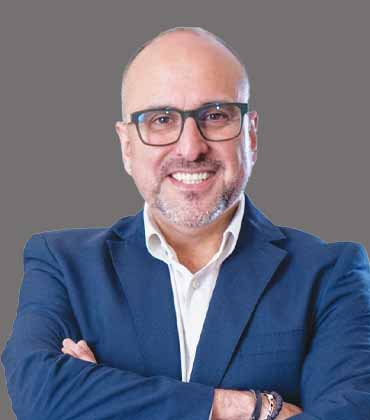
Rodrigo Farias
In Chile and across much of Latin America, sustainability did not enter companies through culture. It entered through regulation, export customer demands and the audit. That is why we built metrics, evidence files and reporting calendars first.
What surprised me was how quickly the conversation stopped being environmental. Once organizations engaged seriously with those requirements, human questions appeared: behavior, leadership, ethical judgment. That last one has been the hardest. It became sharper when the expansion of corporate criminal liability brought environmental and conduct matters firmly into scope, and sustainability stopped being only a statement of intent and began to carry concrete responsibilities. On the social side, shared value stopped being a line in the annual report and became something you have to demonstrate. None of that can be solved by a specialist team alone. It is fundamentally a people challenge.
The Contract Nobody Signs
Denise Rousseau, the Carnegie Mellon organizational behavior scholar, gave us the language of the psychological contract decades ago: the unwritten expectations between a person and their organization. I have become convinced that sustainability creates one of its own.
As the system matures, people identify with the organization's desire to change, and expectations become mutual. The company expects stronger commitment to its goals. People expect it to walk the talk, visibly. And they are extraordinarily attentive to gaps in the discourse, especially when that discourse travels outside the company without evidence behind it.
That is where the contract fractures. A promised investment that never materializes. A leader who pushes hard on resource consumption because it is easy to measure, and quietly lets everything else go.
From Declaration to Behavior
I have come to call it conscious production: the point at which sustainability stops being an external requirement and becomes part of how the work is done. That forces us to translate principles into observable behavior. An operator who stops an unsafe condition. A supervisor who holds the standard when the shift is running late. A manager who decides knowing what the decision leaves behind.
“ The report is reviewed once a year. Coherence is reviewed every day, by the people who remember what we promised them. “
In my experience, the initiatives that survive are the ones lived, assessed and heavily criticized by operators and floor technicians, who experience the strategy in reality rather than in a presentation. That asks a great deal of the People function: to take criticism without becoming defensive and to know how to redirect it. Impact and influence are not peripheral skills here. They are the work. As Kim Barnes argues in Exercising Influence, influencing without formal authority is a practiced skill, not a personality trait.
The Test Comes With Pressure
Cost, deadlines and production pressure quickly reveal which leaders remain consistent, and the marker is coherence. Those who let go are usually the ones who never assessed what this agenda would demand of their people. I worked with a leader who demanded impeccable work and said so in every meeting. When we got to the conversation about how much time learning actually takes, impeccability became negotiable. The standard held as long as it cost nothing.
The People function can design, train and accompany, but the line leader turns intention into daily experience. That is where it is decided whether a warning gets heard or whether the month's target displaces everything else.
Before Resilience, Conviction
I am careful with the word "resilience." For me it means more than withstanding an impact: it means coming through with greater capacity to face what comes next. Organizations may not face defining shocks every day. What they need most days is conviction: a shared belief that the path makes sense, firm enough to hold when the targets look far away.
Which is why I do not believe hiring well solves the problem. We can select excellent profiles and use sophisticated assessments, but no tool immunizes anyone against an incoherent organization. Even the most talented person feels frustration, and sometimes sadness, when the organization they joined turns out not to be the one they were shown. The People function has real work to do there, but it cannot carry the agenda alone. Programs designed inside and delivered without emotion arrive without spirit, and people notice that immediately. Emotion is the first thing we engineer out of the design, and it is precisely what makes people want to carry an agenda forward.
Who Really Audits
Everything above, the behavior, the coherence, the conviction, is built between people who know one another. That takes continuity: teams that last long enough for trust to have something to rest on. It is not that low turnover produces sustainability. It is that without some permanence, none of this takes root.
Sustainability entered our companies through the audit, and by now the auditor is no longer the only one auditing. The report is reviewed once a year. Coherence is reviewed every day by the people who have been around long enough to remember what we promised them.
The articles from these contributors are based on their personal expertise and viewpoints, and do not necessarily reflect the opinions of their employers or affiliated organizations.

Be first to read the latest tech news, Industry Leader's Insights, and CIO interviews of medium and large enterprises exclusively from Manage HR Magazine
