
A featured contribution from Leadership Perspectives: a curated forum reserved for leaders nominated by our subscribers and vetted by the Manage HR Advisory Board.

The Stonegate Firm
Designing the Systems Behind Exceptional Leadership
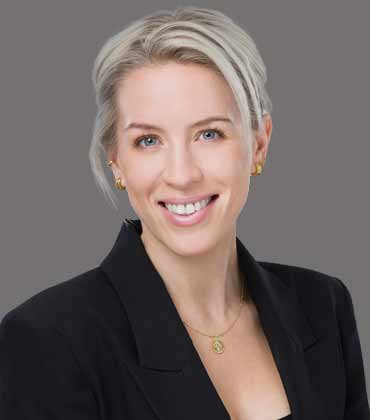
Dr. Ripley Fuller
Dr. Ripley Fuller is a people and organizational leader who combines business strategy, industrial-organizational psychology and operational experience to strengthen leadership capability and organizational performance. As Chief People Officer (CPO) at The Stonegate Firm, she builds systems that enable leaders and teams to perform consistently.
From Business Strategy to Organizational Psychology
Dr. Fuller’s career did not follow a traditional HR path. She studied business and pursued an MBA to understand how organizations grow, compete and create long-term value. Her curiosity about why some organizations consistently outperform others eventually led her to industrial-organizational psychology, where she completed a master’s degree and PhD focused on organizational behavior, leadership and evidence-based decision-making.
Her experience across both operational and people functions further shaped her perspective. She saw firsthand that people’s capabilities and business performance cannot really be separated.
That realization became foundational to her approach as a CPO. At Stonegate, Dr. Fuller had the opportunity to put that thinking into practice. She had met the co-founders while working as a consultant and business strategist, and they gave her full rein to experiment. One of the biggest intentional shifts that followed was moving HR away from being the primary solver and toward equipping leaders to lead effectively on their own.
Today, her approach is rooted in a belief that organizations rarely struggle because they lack talented people, but because their leadership systems fail to create clarity, accountability and alignment. Rather than treating talent acquisition or HR processes as the end goal, she focuses on building the organizational operating system that allows capable people to perform consistently and gives leaders the structure and accountability to help them succeed.
Building Leadership Capability at Scale
At Stonegate, Dr. Fuller’s approach centers on scalable leadership systems and stronger accountability. She has worked to reposition the function as the architect of leadership capability.
The distinction is intentional. Dr. Fuller’s HR team provides frameworks, coaching, tools, expectations and strategic oversight, while managers are expected to lead where the work happens. That philosophy also requires her to stay close to execution.
In Stonegate’s distributed environment, comprising more than 300 employees and a remote executive team, she works directly with directors, regional vice presidents and operational managers to ensure that leadership initiatives are not just designed but implemented and followed through. For Dr. Fuller, the value of a people strategy depends on what happens after the framework is created.
One example is Stonegate’s onboarding process, which Dr. Fuller redesigned to make early employee experience more streamlined and scalable. Drawing on her experience with Zoho CRM, she used automation and customization to clean up the process and reduce the administrative friction associated with onboarding as the organization grew. She also introduced Career Development Plans (CDP) for senior leaders, which have become a central part of her leadership-development model.
The plans involve senior leaders engaging with Dr. Fuller in a one-on-one hour every month, giving leaders dedicated time to set tangible goals, receive feedback and work through professional and personal development. She introduced this structure as Stonegate was scaling rapidly, when changes in the organization could leave managers feeling uncertain about their roles and direction. In a distributed environment, that challenge can be compounded by the lack of day-to-day in-person interaction. The CDPs provide a consistent leadership touchpoint that helps develop leaders while supporting their ability to navigate growth and change.
She has also automated the creation of standard operating procedures and empowered department heads with greater decision-making authority, reinforcing the broader objective of building leadership capability rather than centralizing decisions within HR.
Engineering Culture through Everyday Systems
Dr. Fuller views culture as something that must be embedded into how an organization operates rather than treated as a separate employee benefit. ‘Culture is an operating system, not a perk,’ is the principle guiding her approach.
" The greatest competitive advantage isn’t recruiting exceptional employees. It’s creating exceptional managers who multiply the performance of everyone around them. "
This perspective is particularly important at Stonegate, where employees and executives work across geographies and the organization. For Dr. Fuller, scale and distance make it even more important that the systems governing hiring, development, recognition and accountability consistently reinforce the organization’s expectations.
The approach also reflects her broader view of the workforce challenges organizations face. She believes businesses often underestimate the cost of mediocre leadership. Organizations invest significantly in attracting talented employees while underinvesting in the managers responsible for developing and retaining them.
In her experience, employees rarely leave solely because of compensation. Unclear expectations, inconsistent leadership, limited development and unhealthy environments can have a greater influence on whether people are able to do their best work.
As a result, leadership capability becomes a mechanism for improving both employee experience and organizational performance.
Redefining the Modern People Function
Dr. Fuller does not see the future of HR as becoming more administrative. Instead, she sees it becoming more strategic. Her view of the future of HR extends beyond the traditional model of policy enforcement and transactional support.
Compliance remains essential. However, she believes compliance alone is not enough to create a competitive advantage. Modern people leaders should instead operate as architects of organizational performance, combining data, behavioral science and business strategy to improve decision-making and create environments where high performance can be sustained. That requires people leaders to understand the business as deeply as they understand human behavior.
Dr. Fuller encourages emerging leaders to develop financial acumen, learn how operations work, understand how revenue is generated and study strategy alongside psychology. Her own combination of business and organizational psychology has shown her the value of being fluent in both human behavior and business performance.
She also encourages people leaders to remain intellectually curious, read broadly, challenge assumptions and rely on evidence rather than trends. In her view, some of the best leadership decisions come from asking better questions instead of trying to provide quicker answers.
For Dr. Fuller, resilient organizations are built through trust, consistency, honesty and fairness. Employees do not expect perfection from their leaders, but they do expect consistency. That belief shapes how she defines the CPO role. It is not a function responsible for managing people in isolation, but a strategic leadership role focused on designing an organization where great leadership becomes repeatable, culture becomes scalable and exceptional performance becomes an expected outcome.
The articles from these contributors are based on their personal expertise and viewpoints, and do not necessarily reflect the opinions of their employers or affiliated organizations.

Be first to read the latest tech news, Industry Leader's Insights, and CIO interviews of medium and large enterprises exclusively from Manage HR Magazine
