
A featured contribution from Leadership Perspectives: a curated forum reserved for leaders nominated by our subscribers and vetted by the Manage HR Advisory Board.

Cirrus Asset Management
Turning Workforce Strategy into Business Strategy
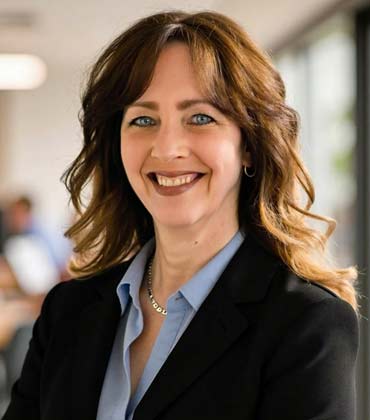
Denise Terry
For years, workforce planning has often started with a deceptively simple question: How many people do we need?
I believe the better question for the future of work is: What capabilities will our business need - and what is the smartest way to access them?
That distinction matters.
Too often, business strategy is developed first and workforce strategy follows. Leaders determine growth targets, markets, investments and operating priorities, then HR is asked to determine the people required to execute them.
But people aren’t simply an input into a strategy that already exists. If the organization doesn’t have - or can’t develop - the capabilities the strategy depends on, the strategy itself might not be achievable.
From Headcount to Capability
A position is a box on an organizational chart. A capability is the ability to produce an outcome.
Organizations that continue planning primarily around positions risk solving tomorrow’s problems with yesterday’s organizational structures.
Instead, leaders should start by asking: What work will create the most value? What capabilities will differentiate us? Which skills are becoming less relevant? Where are we overly dependent on individual knowledge? And which work should be performed by employees, augmented by AI, automated, redesigned or sourced differently?
That’s a very different way of thinking about workforce planning. It moves us beyond hiring and succession toward what I think of as capability portfolio management.
Just as executives decide where to allocate financial capital, we should make equally deliberate decisions about human capital:
• Where to invest: Which capabilities warrant greater resources?
• Where to build: Which capabilities should we develop internally?
• Where to redeploy: Where could existing talent create greater value?
• Where work itself should change: What should be redesigned, automated or augmented?
Plan for Scenarios, Not Certainty
Traditional workforce plans often assume the future will resemble the forecast. Increasingly, that’s an expensive assumption.
AI, economic volatility, changing employee expectations and new business models are altering jobs faster than many organizations can rewrite them. The competitive advantage may no longer be predicting the workforce perfectly. It may be building one capable of adapting quickly.
“The future of workforce strategy isn’t about predicting how many people the business will need. It’s about designing what the business will be capable of becoming.”
That requires scenario-based workforce planning. For example:
• If demand increases 20 percent, where does capacity break first?
• If technology eliminates 30 percent of the transactional work in a function, what higher-value capabilities should replace it?
• If a critical leader leaves tomorrow, where is the vulnerability?
• If the business enters a new market, can existing talent support it?
These are not HR questions. They are business-continuity, growth and investment questions.
Put Workforce Decisions on the Same Table as Financial Decisions
One of the biggest shifts I believe HR leaders need to make is also one of the simplest: translate workforce decisions into business consequences.
Turnover isn’t only an engagement metric; it can mean lost productivity, institutional knowledge and significant replacement costs. Succession planning is ultimately about managing business risk. And when we invest in leadership development, we’re investing in the organization’s ability to execute. Organizational design, at its core, is about whether we’re deploying resources where they can create the greatest value.
The same applies to workforce data. Reporting what happened is useful. Helping leaders decide what should happen next is far more valuable.
Going forward, HR needs to connect workforce intelligence with financial and operational data so leaders understand not just how many people they have, but whether they have the right capabilities, in the right places, at the right cost, to execute what comes next.
Strategy Begins with What the Business Must Be Able to Do
The strongest workforce strategy doesn’t begin with HR programs. It starts with the future state of the business.
What must we be able to do exceptionally well two or three years from now that we can’t do today? Which capabilities will create competitive advantage? Which will technology fundamentally change? Where are our greatest talent dependencies and risks?
Then comes the harder question: What decisions should we make today because of those answers?
That’s where workforce strategy becomes business strategy.
The organizations best positioned for the future won’t necessarily have the largest workforces, the newest technology or the most HR programs. They’ll be the ones that continuously align work, talent, technology and investment around the capabilities that create the greatest value.
The future of workforce strategy isn’t about predicting how many people the business will need.
It’s about designing what the business will be capable of becoming.
The articles from these contributors are based on their personal expertise and viewpoints, and do not necessarily reflect the opinions of their employers or affiliated organizations.

Be first to read the latest tech news, Industry Leader's Insights, and CIO interviews of medium and large enterprises exclusively from Manage HR Magazine
