
A featured contribution from Leadership Perspectives: a curated forum reserved for leaders nominated by our subscribers and vetted by the Manage HR Advisory Board.

Cargill
Transforming Learning & Development: Innovating for Global Access and Impact
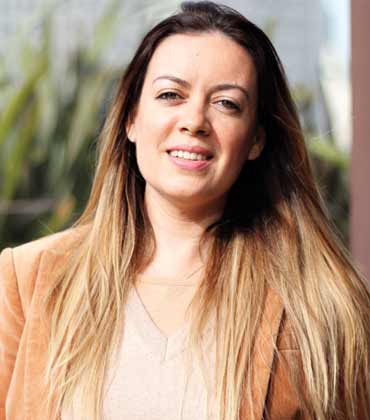
Denise Pietragallo
Denise Pietragallo is the Global Professional Skill Development Manager at Cargill, where she leads the design and implementation of learning experiences to ensure employees across the globe have access to impactful development opportunities. Her role involves understanding business needs, securing stakeholder commitment, developing deployment roadmaps, and partnering to launch and govern learning initiatives. Denise also defines learning goals and solutions aligned with Cargill's business objectives and overall strategy.
With over 20 years of experience in human resources, including 10 years focused on business partnering, senior consulting, and managing global and regional HR roles, Denise is passionate about fostering growth and development in others, both in formal leadership roles and informal settings. She is dedicated to empowering individuals to reach their highest potential, driving organizational success through impactful learning and development initiatives.
From Experience to Leadership
I have over 20 years of experience in human resources, with the last 10 years focused on business partnering, senior consulting, and talent management. I’ve held leadership roles, such as HR Service Center Manager for the Americas region and LATAM L&D and Talent Manager. I hold a Bachelor's in Human Resources and Labor Law from the University of Buenos Aires, along with certifications in Neuro-Linguistic Programming, Team Effectiveness, Culture Model, Hogan Executive Assessments, StrengthsFinder, and Strategic Workforce Planning.
Currently, I’m a Global Professional Skill Development Manager - L&D CoE at Cargill, where I design and implement learning experiences to ensure that employees have access to effective learning opportunities. I partner with stakeholders to understand business needs, create deployment roadmaps, and align learning goals with company strategy.
Leveraging AI and Data to Customize and Transform Global Skill Development
We’ve been modernizing the L&D area by incorporating technology to build an ecosystem that supports both asynchronous and synchronous learning. Recently, Cargill’s Data & Technology team has started integrating AI into operations, and we’re testing more AI-driven solutions within L&D. AI, along with other technologies like AR and VR, enables personalized learning, more engaging content, and real-time feedback. These innovations allow us to continuously improve programs and align them with business goals, ensuring global access to impactful learning opportunities.
"What matters most is how we leverage data from these tools to continuously improve programs. Measuring success allows us to identify areas for improvement and replicate successful elements in future programs"
The first step in developing programs is conducting an audience and needs analysis to understand what we’re trying to accomplish and whether learning is the right solution. We assess learners' knowledge, skills, job roles, preferences, and skill gaps. By analyzing these factors, we ensure the learning solutions are relevant and engaging for all participants, regardless of their background.
For example, we ask questions like:
• What is your current level of knowledge?
• How do you prefer to learn (visual, auditory, hands-on)?
• What are your career goals, and how can this training support them?
This approach ensures inclusivity and effectiveness across diverse learning styles.
Ensuring Global Access: Key Trends Shaping the Future of L&D
We leverage a comprehensive learning technology ecosystem to provide equitable access to resources for all employees. Our system democratizes learning, offering access to various experiences, including instructor-led sessions, virtual classrooms, interactive modules, articles, podcasts, and courses. This flexibility ensures employees can engage with learning content at their convenience, overcoming challenges like time zones and geographic distances.
Several trends will shape L&D in the future:
• Learning at the Pace of Change: L&D must adapt quickly to provide timely, relevant learning opportunities as industries evolve.
• Microlearning: Shorter, focused learning modules will cater to just-in-time learning, helping employees stay agile.
• AI-Driven Personalized Learning: AI will offer tailored learning experiences, improving engagement and effectiveness.
• Practical Learning: Hands-on experiences, like simulations and real-world projects, will be emphasized to apply knowledge in real scenarios.
• Interactive Learning Technologies: AR and VR will create immersive, engaging learning experiences.
• Data-Driven Decision Making: Data analytics will help organizations measure learning effectiveness and refine strategies.
These shifts will ensure that learning remains relevant, engaging, and aligned with business needs.
Measuring Success: Key Metrics for Evaluating Professional Development Programs
We use a mix of tools tailored to specific learning goals. For technical skills, we assess knowledge gain using pre-and post-training assessments. For professional skills development, we rely on feedback from employees, managers, and subject matter experts. The Kirkpatrick Model is a key framework we use, evaluating effectiveness across four levels: reaction, learning, behavior, and results.
What matters most is how we leverage data from these tools to continuously improve programs. Measuring success allows us to identify areas for improvement and replicate successful elements in future programs.
Making an Impact: Advice for Aspiring HR Professionals
I would recommend the following to aspiring HR professionals:
• Create Client-Centric Learning Solutions: Focus on developing programs that genuinely benefit your clients and meet their needs.
• Test Solutions Iteratively: Gather feedback during the development process and make adjustments to ensure effectiveness.
• Foster Collaboration: Encourage knowledge sharing and create opportunities for peer-to-peer learning and mentoring.
• Promote Inclusivity: Design programs that cater to diverse learning styles and backgrounds, ensuring accessibility for all.
• Embrace Life-Long Learning: Continuously update your knowledge and skills to stay relevant in HR and L&D.
• Be Open to Innovation: Experiment with new tools and approaches to enhance learning experiences.
• Enjoy the Learning Journey: Learning is an ongoing process. Celebrate progress and inspire others to do the same.
These strategies will help create meaningful, lasting impacts, fostering a culture of continuous improvement.
The articles from these contributors are based on their personal expertise and viewpoints, and do not necessarily reflect the opinions of their employers or affiliated organizations.

Be first to read the latest tech news, Industry Leader's Insights, and CIO interviews of medium and large enterprises exclusively from Manage HR Magazine
