
A featured contribution from Leadership Perspectives: a curated forum reserved for leaders nominated by our subscribers and vetted by the Manage HR Advisory Board.

Ring Power Cat
Building Capability beyond Training
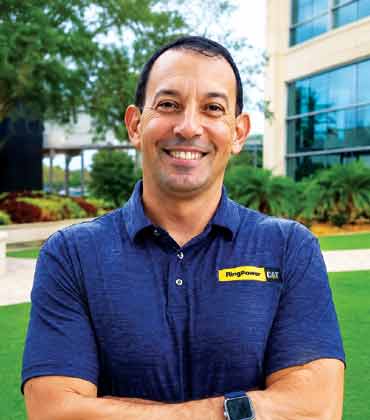
Anthony Pellegrino
For healthy organizaztions, a culture in which employees have ample learning opportunities is paramount. When working well, the learning culture is robust and aligned across all vectors. All levels of employees see their development as valued and integral to their own, their team’s, and the organization’s success. However, developing a thriving and resilient learning culture is challenging in the best of circumstances, and made more so when, like most organizations, we are trying to “build the plane while flying.” Most of us do not have the luxury of setting up the conditions that guarantee alignment between operations and professional development at a company’s founding. Likewise, we rarely have the opportunity to shape the culture from the ground up. Instead, we plan and make decisions as the organization is operating and changing. That complexity requires learning and development leaders to embrace change, collaborate with purpose, and intentionally move their functions from taking orders on the next “training” request to establishing partnerships with stakeholders to determine need, modality, and outcomes. In our mid-sized heavy equipment dealership, we have made some progress on these fronts, endured missteps, and pivoted based on an ever-changing landscape.
Our latest chapter began about a decade ago when we started exploring leadership and professional development at our dealership in earnest. In those days, our approach was limited, programs were concentrated on senior leaders, and we depended heavily on external facilitators who focused on broad leadership principles by facilitating discursive training events. These programs provided valuable exposure to contemporary leadership concepts and helped establish leadership development as a legitimate organizational priority. However, the training was episodic, often disconnected from day-to-day business challenges, and difficult to scale across the organization for our employee population. So, one might say that we had intentions to establish a learning culture, but we had work to do to make it robust, relevant, and embedded in the fabric of the organization.
Embracing Change
Recognizing the need for a more intentional and sustainable approach, we invested in internal capability. One of the outside consultants was hired as a full-time facilitator; eventually evolving into a dedicated four-person team within a newly established Professional and Organizational Development function. This shift represented more than a staffing change. It signaled a commitment to making leadership and professional development a core organizational capability rather than an outsourced activity.
Our early work with the team centered on foundational leadership skills. We grounded our efforts in the idea that effective leadership begins with self-awareness. As a result, we designed programs that emphasized emotional intelligence, personal reflection, feedback, and understanding individual leadership tendencies. Participants were encouraged to explore how their behaviors affected team performance, communication, and workplace culture. These topics resonated with our participants because they encouraged participants to leverage their knowledge of self in their leadership and management capacities.
Collaboration and Strategic Planning
As our programs matured, so did our understanding of the organizational needs. While self-awareness remained a cornerstone of our philosophy, our colleagues increasingly asked for help addressing authentic business challenges. In response, we collaborated with those individuals and their leadership to include more strategic and tactical applications to our curriculum. Topics such as talent selection, interviewing practices, employee development, coaching, change leadership, and continuous improvement became integral components of our expanded offerings.
“For us, the most important lesson has been that sustainable impact comes not from delivering training, but from building the capabilities that help our people and the organization in which we work thrive.”
This evolution reflected an important lesson: leadership development is most effective when it bridges the gap between personal growth and organizational performance. All employees including our leaders need opportunities to develop emotional intelligence and interpersonal effectiveness, but they also need frameworks and tools that help them solve problems, improve processes, and deliver business results. We were learning and building through collaboration.
Building Strategic Partnerships
By 2025, we recognized progress we made but also noted opportunities to better align with the business and share the ways our work was directly impacting the people. In that spirit, we challenged ourselves to rethink how we measured success. Like many learning organizations, we had relied heavily on participant evaluations and activity metrics such as capacity, course completions, and instructional hours delivered. While these measures provided useful information and allowed us to boast about our “busyness,” they offered only a limited understanding of the true impact of our work. Our stakeholders knew we were conducting a lot of classes, but they could only surmise how it affected their operations.
Over the past twelve months, we have worked to develop more descriptive and inferrential measures. In addition to traditional satisfaction data, we have focused on behavioral application, stakeholder feedback, organizational outcomes, and evidence of leadership practices being implemented in their work. The goal is not simply to collect more data but to tell a more complete story about how leadership and professional development is influencing individual performance and organizational effectiveness.
The impact of this shift has been both significant and instructive. More thoughtful evaluation methods have helped us build credibility and trust with our stakeholders. Business leaders have noted greater visibility into the value being created through leadership development investments, and conversations have increasingly moved from training activity to organizational outcomes. Fundamentally, the credibility we have established has enabled us to move from serving as an order-taker to becoming a strategic partner.
That shift in focus and work has informed our need for structural refinement as well, resulting in our transition toward a Centers of Excellence model whereby expertise, resources and standards are centralized for efficiency and effectiveness. We now emphasize distinct areas of expertise, enabling us to create more targeted learning pathways while improving alignment between development programs and organizational needs. For example, while our leadership development program will continue to emphasize self-awareness, emotional intelligence, and psychological safety, our manager training program under development will focus on tactical tools, policies, and practices necessary to lead a high-performing team. This structure also positions us to respond more effectively to future challenges while maintaining consistent quality and governance across initiatives.
Looking back, our journey from externally facilitated executive programs to an internally driven organizational development function reflects a broader shift occurring throughout the learning profession. Leadership and professional development are no longer viewed as a series of discrete events but as an integral part of successful organizational performance. For us, the most important lesson has been that sustainable impact comes not from delivering training, but from building the capabilities that help our people and the organization in which we work thrive.
The articles from these contributors are based on their personal expertise and viewpoints, and do not necessarily reflect the opinions of their employers or affiliated organizations.

Be first to read the latest tech news, Industry Leader's Insights, and CIO interviews of medium and large enterprises exclusively from Manage HR Magazine
