
A featured contribution from Leadership Perspectives: a curated forum reserved for leaders nominated by our subscribers and vetted by the Manage HR Advisory Board.

Strada Services
Building Neuroinclusive Workplaces through Equitable HR Practices
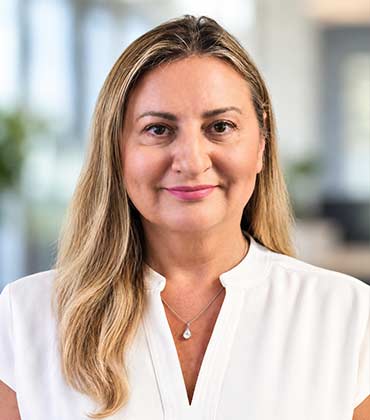
Anna Oudodova
Creating Workplaces Where Neurodivergent Employees Can Succeed
Neuroinclusive workplaces are not created through isolated programs. They are created when organizations remove unnecessary barriers from hiring, management, performance and career development while maintaining clear, job-related standards. This is equity within a framework of accountability. Employees may need different tools or approaches, but the standards remain legitimate, consistent and transparent.
The scale of the opportunity is significant. Neurodiversity, which includes autism, ADHD, dyslexia and other neurological differences, is estimated to describe 10 percent to 20 percent of people worldwide. About 1 in 31 children in the United States is now diagnosed with autism spectrum disorder. A substantial pipeline of young people with this diagnosis is moving toward higher education, training and employment.
Moreover, neurodivergent people are already part of the current workforce. The question for HR leaders is whether workplace systems allow these individuals to demonstrate their capabilities, contribute fully and advance.
HR should examine the full employee experience: job descriptions, recruiting, selection, onboarding, day-to-day management, performance reviews and career development. The goal is to identify where style is being mistaken for capability and remove barriers that are unrelated to the essential functions of the job.
This became personal for me a few years ago when an employee disclosed an autism diagnosis during a particularly difficult period at work while also dealing with significant personal challenges. I remember thinking that this could be my child in 20 years. That experience reinforced for me that effective HR leadership must be both human-centered and accountable. Employees need empathy, clear expectations, appropriate support and a genuine opportunity to succeed.
Equipping Managers to Support Neurodivergent Employees
Managers need practical tools, not just awareness training. A high-impact place to begin is the interview process. Traditional interviews often reward rapid verbal responses, eye contact, comfort with ambiguity and the ability to sell oneself. Those behaviors may matter in some roles, but they are not necessarily reliable measures of someone's ability to perform the actual job.
Organizations can keep standards high and make selection more job-relevant by using structured interviews with the same job-related questions and evaluation criteria for every candidate. They should tell candidates in advance what the interview will involve and who they will meet, explain how to request a reasonable accommodation and route formal requests through the established HR process. Work samples or skills demonstrations can provide a better measure of competence when appropriate. Organizations should also separate essential competencies from preferences or nice-to-haves and score candidates against the essential criteria.
If a role requires analyzing data, a work sample will tell you far more than small talk will. If communication is essential, assess it against job-related criteria, not assumptions about what good communication should look like.
Once an employee is hired, managers should set priorities in writing, define what successful performance looks like, use agendas for important meetings, document agreed action items, provide feedback on a predictable cadence and give advance notice of significant changes when operationally possible. They should also ask employees which communication methods and working conditions help them perform effectively.
These practices often benefit the broader workforce as well. Clarity, consistency and structured expectations are good management.
Addressing Barriers to Inclusive Employee Experiences
The biggest challenge is moving from good intentions to practical implementation.
Stigma is real. Employees may worry that asking for support will affect how managers and colleagues see them, the assignments they receive or their opportunity to advance. In one recent survey, two-thirds of employed neurodivergent adults said they were afraid to leave their jobs because they doubted they would find another.
“The goal is to identify where style is being mistaken for capability and remove barriers that are unrelated to the essential functions of the job.”
HR leaders should assess whether requests are handled confidentially, whether managers respond without judgment, whether support is implemented consistently and whether employees trust that asking for help will not be treated as a lack of capability.
Organizations also need to challenge the misconception that inclusion necessarily means expensive or complicated programs. Often, the first changes are managerial: clearer communication, structured processes, better documentation, thoughtful interviewing and greater flexibility in how employees demonstrate competence.
Formal accommodations involve disability-related needs and should follow the organization's established HR process. Training managers to recognize these categories helps them respond promptly without over-formalizing everyday flexibility or handling sensitive requests on their own.
Balancing Individualized Support with Consistent Standards
Organizations should establish clear, job-related standards for performance, conduct, attendance, safety and other essential requirements. They should also confirm that those standards are necessary, consistently applied and communicated in ways employees can understand.
I think of this as equity within a framework of accountability. Individualized support should help employees understand expectations and perform the essential functions of their jobs. It should not eliminate legitimate performance requirements.
HR should help managers determine whether an issue reflects a performance gap, a communication difference, an accommodation need or unclear expectations. The response should match the issue: clarify the standard, coach the manager or employee, use routine flexibility when appropriate or begin the formal accommodation process.
Advice for HR Professionals
Lead with curiosity, test assumptions and measure whether practices improve access and performance.
HR teams should ask whether selection methods measure essential job requirements rather than social performance, employees receive clear expectations, documented priorities and useful feedback, and managers recognize different communication styles and know when to involve HR.
They should also assess whether employees feel safe requesting support, whether requests are handled promptly and consistently, and what key measures such as candidate pass-through rates, accommodation response times, retention, internal mobility, performance-review consistency and employee feedback reveal about the effectiveness of their practices.
These measures should be reviewed over time, interpreted carefully and protected by appropriate privacy safeguards. The employment gap remains significant, although its precise scale is difficult to determine because employment outcomes are not measured consistently across neurodivergent conditions or populations. Available studies consistently indicate substantial employment barriers for neurodivergent adults, but reported rates vary widely depending on the condition studied, the population surveyed and whether the measure captures employment, full-time employment or labor-force participation.
Growing employer attention to neurodiversity has not yet translated into equal employment opportunity though U.S. job postings that mention neurodiversity grew from 0.5 percent in 2018 to 1.3 percent in 2024.
The message for HR leaders is clear: awareness is increasing, but there remains a substantial gap between awareness and employment opportunity.
Review your hiring, onboarding, performance management or career development practices. Identify where style is being mistaken for capability, remove one unnecessary barrier and define how you will measure the result. As HR leaders, we have an opportunity to build workplaces where differences do not automatically become disadvantages—and where employees receive both the support and accountability they need to succeed.
The articles from these contributors are based on their personal expertise and viewpoints, and do not necessarily reflect the opinions of their employers or affiliated organizations.

Be first to read the latest tech news, Industry Leader's Insights, and CIO interviews of medium and large enterprises exclusively from Manage HR Magazine
