
A featured contribution from Leadership Perspectives: a curated forum reserved for leaders nominated by our subscribers and vetted by the Manage HR Advisory Board.

DTE Energy
The Architecture of a High-Performance Workforce
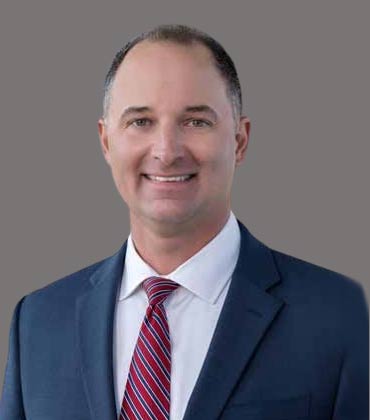
Andrew Keaton
Building Teams that Learn by Doing
My approach is grounded in the belief that improving the work is the work. Over two decades in industrial, utility and corporate environments, particularly in unionized settings—has reinforced that sustainable performance comes from developing people in the context of real work, not separate from it.
I focus on three core principles:
• Integration with operations: Learning is embedded directly into workflows, not treated as an external function. This ensures relevance, adoption and measurable impact.
• Capability over content: Rather than pushing training volume, I prioritize building critical capabilities including technical depth, problem-solving and leadership judgment—that translate into performance in the field.
• Leader-led development: The strongest teams I’ve seen are built by leaders who actively coach, teach and reinforce standards daily. My role is to equip leaders to do that effectively.
This approach has consistently driven higher engagement, faster skill acquisition and improved operational outcomes.
The Cost of Disconnect Between Learning and Operations
The most common failure point is a disconnect between learning functions and the realities of the business. That shows up in a few ways:
• Lack of clear linkage to business outcomes: Training is often measured by completions rather than performance improvement.
• Over-generalization: Generic programs fail to address the complexity of technical roles, especially in utilities and field operations.
• Speed mismatch: Operations evolve faster than learning systems can adapt, creating lag and irrelevance.
• Limited frontline involvement: Without input from those closest to the work, learning solutions miss critical nuances. The frontline is the backbone of the company and the internal customer.
The organizations that get this right treat learning as a strategic lever, co-designed with operations, anchored in real performance gaps and continuously iterated based on results.
The System that Connects Skill, Leadership and Results
You don’t balance them, you integrate them.
High performance happens at the intersection of technical excellence, leadership effectiveness and systems that enable both. My strategy typically aligns around:
• Role-based capability models: Clearly defining what “good” looks like for both technical and leadership roles at each level.
• Work-based learning: Using real business challenges as the primary development vehicle, whether that’s problem-solving, continuous improvement, or major initiatives.
• Leader standard work: Embedding coaching, feedback and development into daily leadership routines.
• Performance systems alignment: Ensuring metrics, incentives and accountability reinforce both technical rigor and people development.
When these elements are aligned, development is no longer a separate effort, it becomes how the organization operates.
"Programs don’t drive change, leaders do. Everyone must work a level up and be provided with autonomy to deliver their best work while being supported and tensioned along the way."
The New Demands on the Energy Workforce Several trends will significantly reshape the landscape:
• Grid modernization and electrification: Driving demand for new technical skill sets while requiring rapid upskilling of the existing workforce.
• Aging workforce and knowledge transfer risk: Utilities face a critical need to capture and transfer deep institutional knowledge before it exits.
• Digital integration (AI, predictive maintenance, data analytics): Shifting roles from purely mechanical execution to data-informed decision-making.
• Workforce flexibility and expectations: Even in traditionally rigid environments, expectations around development, mobility and engagement are evolving.
• Safety and reliability complexity: As systems become more complex, the margin for error decreases, increasing the need for highly trained, adaptable teams.
Organizations that proactively build adaptive, continuously learning workforces will have a significant advantage.
Building Influence Where the Work Happens A few learned principles:
• Stay anchored in the business. If you don’t understand the work, you can’t improve it. Spend time in the field, on the floor and with frontline leaders.
• Measure what matters. Tie everything to performance outcomes including safety, quality, cost, delivery, not participation metrics. Nobody cares about your training metrics move theirs!
• Build credibility through results. Transformation is earned, not declared. Deliver wins that matter to the business.
• Develop leaders, not just programs. Programs don’t drive change, leaders do. Everyone must work a level up and be provided with autonomy to deliver their best work while being supported and tensioned along the way.
• Think systemically. Learning, leadership, culture and operations are interdependent. Treat them that way.
• Be comfortable challenging the status quo. Real transformation requires disrupting legacy thinking, especially in mature industries.
• Become an expert in problem solving. The “A3 Thinking” and or Kaizen methodology will be a great guidepost and backstop when folks are looking for the easy corrective action in times of fear and or uncertainty. Ground yourself and your teams using this proven methodology as rarely is “Training” is an effective corrective action unless there is a skill or knowledge gap.
• 3 simple questions before assuming it’s a training problem is to ask are:
• Is there a Standard?
• Is and or was it followed?
• Is it adequate?
• Is it being sustained?
Ultimately, success in this space comes from combining operational depth, leadership acumen and the discipline to turn development into a competitive advantage—not just a support function. Our goal is not to create a world class training organization but to create a world class workforce.
The articles from these contributors are based on their personal expertise and viewpoints, and do not necessarily reflect the opinions of their employers or affiliated organizations.

Be first to read the latest tech news, Industry Leader's Insights, and CIO interviews of medium and large enterprises exclusively from Manage HR Magazine
