
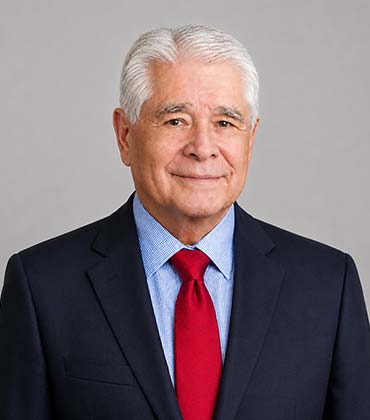
 Alan Landers, Founder and CEO
The client wrote back that they liked him, believed he would take them where they needed to go, but they did not need an “eternal consultant.”
Landers still laughs about that slip-up years later, but the idea the typo captured—that a consultant’s job is to finish and not stay—has defined how he has worked across nearly five decades in organizational development. Today, it shapes ITC, where he works with his partner Buck Seward and a team of 14 senior practitioners from across the country and abroad. The firm helps organizations lead and sustain change by combining survey data with generative conversations to identify what needs to change, and by transferring his knowledge and processes to internal teams that take over once the engagement ends.
“We’re dedicated to teaching clients what we do and how we do it so that they can do it without us,” says Landers.
Bringing Data and Dialogue Together in Practice
For decades, organizational development has often been split into two approaches. Diagnostic OD relies on surveys and structured data to identify issues. Dialogic OD relies on collaborative and emergent conversations to surface what data alone does not capture. Research he cites puts success rates for diagnostic-only approaches at roughly 50 to 60 percent. When combined, outcomes can reach into the 90 percent range.
That combination only works if it accounts for changing conditions during implementation. “You can’t really manage change,” Landers says. “You can lead change efforts, but you can’t control it. There are too many variables.” Leadership shifts, market conditions move and internal priorities change. Plans built at the start often stop matching reality. ITC treats organizations as evolving systems. It builds reassessment into the work as it unfolds. Data is collected, tested through conversation and revisited as conditions shift. Decisions adjust in real time instead of following a fixed plan.
-
We're dedicated to teaching clients what we do and how we do it so that they can do it without us.
Engagements extend beyond executives to managers, supervisors and employees, where critical issues often do not surface upward. In many cases, the need for change is identified first within middle management.
The Change Oversight Team
From that combined input, ITC forms a change oversight team, or COT. This group includes people from across the organization who work with consultants to decide what needs to change and what actions to take. Rather than receiving recommendations, they help build the response so the work continues internally. When people help shape decisions, they are more likely to carry them forward.
Because the team is made up of insiders, it carries credibility and drives adoption as decisions are implemented. As ownership builds, ITC reduces its direct role. Landers compares this to a trail outfitter who equips travelers, provides tools and direction and prepares them to continue on their own. The goal is not to lead the journey, but to ensure others are equipped to complete it on their own.
The work happens through structured discussions such as World Café sessions, where groups rotate and build on each other’s input. These sessions generate input that is shared and built upon. In those settings, AI can help organize and summarize what each group produces in real time, making it easier to see patterns and key issues. It supports the discussion, but decisions still depend on people.
At the Institute for Transformative Change, engagements are designed to be completed, not extended. The focus is on helping organizations reassess, adapt and act as conditions change. The result is teams that can sustain change without ongoing dependence on external consultants.