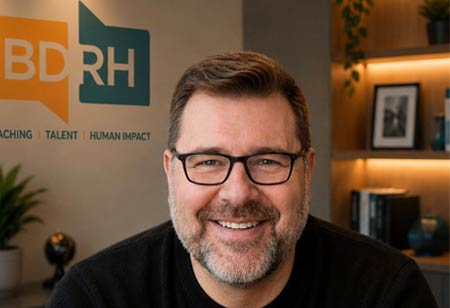
Over the first 15 years of my career, I ran HR and operations at early-stage startups. The workload was always overwhelming, and burnout was common. I saw smart, capable people hit a wall, not because they lacked discipline, but because their tools, habits, and environment were not built for the volume and complexity of the work. That experience fundamentally shaped how I think about productivity, organization, and stress management.
As stress reduction coaching evolves, we are moving away from the idea that stress reduction should be reactive. In order to reduce stress before it starts and to be resilient in the face of stresses that show up, we're now focusing on structural impacts, environmental impacts, and systemic changes. Many wellness products still focus on the individual alone without factoring in any systemic pressures. I start with systems and structures. The environment and expectations, whether explicit or implied, often have a greater impact than yoga or deep breathing alone, although both are useful.
Creating Healthier Workplaces
Coaching solutions should treat stress as a system problem. By examining the environment, tools, and norms people are navigating, we build practical skills, reset boundaries, change defaults, and reassess expectations. That philosophy has guided coaching, workshops, and courses that have reached more than 240,000 people. People who reduce stress and reclaim time are not necessarily the most motivated. They are the ones who build systems that work for them. Living with ADHD has also reinforced an important lesson. I believe not everything will work for everyone. The goal is not to find a perfect system, but to equip people with practical tools they can return to whenever circumstances change, allowing them to reset and move forward with confidence.
It's not a conflict. They reinforce each other. Companies that succeed do a few things consistently. The organization protects focus time. Communication and response time norms across channels are explicitly defined. No policy will survive a leader who emails at 11 p.m. or checks in from the beach. Leadership is what happens, not what is written. Taking an "always on" attitude is not a metric of productivity, but destroys it. According to Gloria Mark's research at UC Irvine, refocusing takes an average of 23 minutes. A workplace that interrupts its people all day has answered its own question.
The Myth of Doing It All
My favorite work with clients has been through longer-term engagements where I listen directly to employees about time, projects, stress, and communication throughout the organization. In both individual skill-building and organizational change, I synthesize the themes and make recommendations to leadership. Acting on what they hear improves retention, engagement, and output.
Those conversations also reveal the most common challenges professionals face today. People are drowning in tasks across multiple systems . Email, Slack, Teams, Asana, Jira, and more. They overestimate what they can get done in a day, so they end every day feeling behind. Their inboxes have become other people's to-do lists. They cannot find time to think, let alone do deep work. And they feel guilty about all of it, which compounds the stress and makes change harder.
-
People who reduce stress and reclaim time aren't the most motivated. They're the ones who build systems that work for them.
And one thing I found interesting when I started doing this work (but no longer do because it's so predictable) is that high achievers, ambitious people, think that they are just one strategy away from figuring out how to "do it all". The reality is that even the most efficient person on the planet still has a maximum capacity. That false belief keeps people stuck, stressed and on the road to burnout. The reality is that we cannot do everything and real prioritization only becomes possible once we admit it. Once we admit that to ourselves, we no longer make false promises, miss deadlines, and be real about what we can do as individuals and as a team with the resources that we have available, including time.
Two Habits That Change Everything
Because, unfortunately, individuals are usually left to fend for themselves when it comes to strategies and systems for time management, productivity, and stress reduction, there are a few things that are going to move the needle a lot, and this is where I would start:
1. Choose one task system and stick with it. Whatever you choose, pick one system to keep all of your tasks in. Each communication channel becomes a funnel into that system. By having everything in one place, you won't have to bounce between systems. You'll feel less stressed and scattered, and you'll be able to see what's on your plate in a clear and concise way. That also makes it easier to have conversations with yourself, your teammates, and your manager about what you can prioritize right now and what needs to be put on hold.
2. Reduce distractions. There is no way to eliminate all distractions, but people can turn off their email notifications. No one uses written communication in an emergency anyway, and every ping or ding distracts you. On average, it takes about 20 minutes to return to what you were doing when you got distracted . It's that one little setting that will make you feel less stressed, less distracted, and help you get more done. You'll be just as responsive, if not more so, by batch-processing your emails several times a day instead of constantly checking them.