


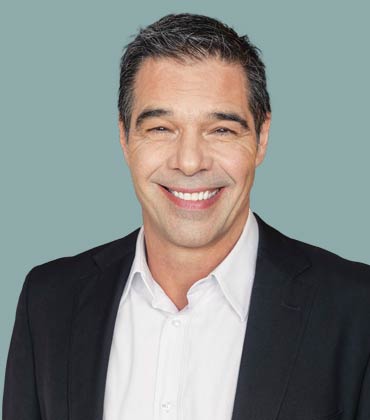
 Francois Heon, M.A.Sc., Ph.D., CEO
“In today’s complex world, we can no longer operate with a single person controlling all the information. Instead, leaders need to take advantage of the strengths of individuals and bring them together around a common will,” says François Héon, M.A.Sc., Ph.D., CEO of a leadership consulting firm bearing his name. “We must involve people’s intelligence and think together to define what we want. That’s democratic leadership, which is exercising ‘power-with’ people and situations, not ‘power-over’ them.”
With over three decades of international experience in leadership consulting and organizational psychology, Héon recognizes that effective leadership has evolved beyond individual dominance or top-down authority. He emphasizes democratic leadership, a process that fosters both individual empowerment and collective unity to achieve shared goals.
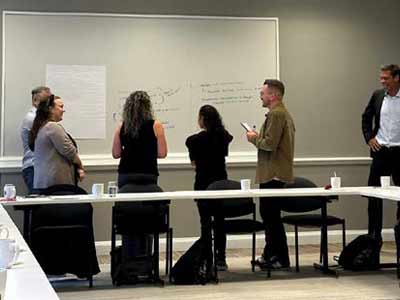
Héon’s distinctive method—the Group Leadership Seminar—allows organizations to harness the power of collective intelligence. This methodology combines group leadership, real-world application, years of research, and participatory decision-making, enabling teams to align their values and priorities while fostering leadership from within.
The Group Leadership Seminar
My Integrative Leadership Model Empowers Individuals And Groups To Thrive. Through Simplicity, Accessibility, And Real-World Applicability, This Model Is Shaping The Future Of Leadership Development— One That Emphasizes Self And Group Unity, Collaboration, And Shared Leadership At All Levels
Héon’s flagship method, the Group Leadership Seminar, unlocks the potential of teams. Drawing from Appreciative Inquiry—a methodology rooted in positive psychology and change management—Héon has streamlined its two core principles, of appreciative and intentional leadership, into a process that can be implemented in a single day. The seminar enables groups, whether executive teams, boards of directors, or large workforces, to identify two critical elements that drive collective success:
1. what a group values and 2. what a group wants together.
The seminar’s philosophy is simple yet powerful: groups align on what they value most and what they want to achieve together. These two factors form the foundation for any group to build cohesive and effective leadership.
Designed for efficiency, the method can be executed in as little as half a day. It goes beyond just facilitating conversations; it delivers concrete, actionable results that can be implemented immediately. By the end of the seminar, groups leave with a greater sense of belonging, as well as, a clear sense of purpose, a shared set of values and priorities, and specific steps to move forward—empowering teams to turn alignment into action.
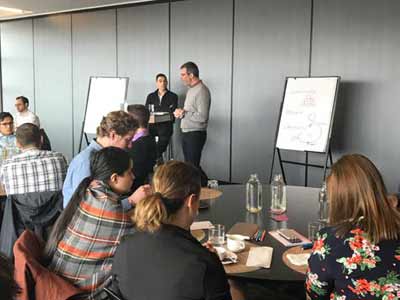
Offered as a participatory workshop, either in person or virtually, the methodology is based on two complementary group reflection activities—The Appreciative Assessment and The Wall of Intentions. The former allows the group to identify the major priorities and values that unify and motivates it, while the latter leads the group to identify key intentions and collective actions for moving forward together.
-
We must involve people’s intelligence and think together to define what we want. That’s democratic leadership, which is exercising ‘power-with’ people and situations, not ‘power-over’ them
This pragmatic and mobilizing approach develops the group’s leadership capacity by allowing individuals to express themselves, be heard, and develop a common understanding of what they value and want to achieve together. It enables businesses to create meaning and collective commitment with the full contribution of every team member, whether in a board of directors, a management committee, or an employee meeting. Héon’s methodology is applicable to both small and large groups, with no limit to the number of participants.
The Yin and Yang of Leadership
At the heart of Héon’s integrative leadership model lies the transformational dialogue between a humble receptive yin and a confident assertive yang—the concept of complementary forces. Leadership success also depends on integrating these key principles as two fundamental mindsets. While these principles have long been recognized, Héon elevates them by identifying distinct ways of integrating them to drive both individual and group success.
Héon’s model proposes two transformational perspectives that can help any individual or group develop their leadership potential. His participative methodology demonstrates the real value of this integrative yin-yang model by enabling individuals and managers to effectively apply it in their own growth, and unity of action. Developed and refined through his PhD research, Héon helps leaders grow individually and collectively by developing both their appreciative (yin) and intentional (yang) leadership. His goal has always been to make leadership accessible to all by offering a simple yet powerful tool for development grounded in real-world application.
 By appreciating (i.e., appraising, valuing, and meaning-making) our experiences, and acting with intention (i.e., acting with positive and confident intent for what one wants most), a person develops what leadership scholars have also called being “Experience Conscious” (Follett, 1927), “Experiential Learning” (Kolb, 1989), “Mastery” (Senge, 1991), “Presencing” (Scharmer, 2009) or “Self-Directed Learning” (Boyatsiz, Goleman, 2010).
“The learning and transformational effect of integrating both appreciative and intentional postures has also been highlighted by feedback from former clients during my PhD research. Workshop participants shared how both appreciative and intentional perspectives had been beneficial to them as ways of “self-assessing,” “self-tuning,” or “double-centering,” and confirmed how accessible these transformational leadership attitudes can be for any individual and group.”
Simplicity, Flexibility, and Real-World Impact
Héon’s leadership model is renowned both for its simplicity and effectiveness. It distills complex theories into actionable steps that anyone can implement. To ensure its effectiveness, Héon has gathered client feedback over the past decade, building a data-driven foundation for the model. Feedback from participants, ranging from medical faculty deans to corporate managers, has been consistently positive across leadership seminars, workshops, and coaching sessions.
The model’s flexibility makes it suitable for individuals looking to improve personal leadership skills and groups striving to function as cohesive units. This dual focus on individual and group leadership development sets it apart. It doesn’t just create better leaders—it builds more dynamic and effective teams. By fostering collective decision-making skills, this model aims to empower groups to lead more effectively, reducing reliance on authoritarian methods.
 Testimonials and success stories serve as powerful evidence of the model’s impact. For example, a medical faculty dean noted how the model shifted their faculty’s leadership culture, fostering collaboration and reducing hierarchical decision-making.
In another case, a primary school that had suffered from a longstanding culture of union-management conflict found new hope in just 30 days, thanks to the Group Leadership Seminar. The seminar, conducted through four two-hour mini-sessions with 60 teachers, and then a half-day plenary, focused on what they valued most about the school and their vision for its future. This process fostered appreciation and a shift in mindset, allowing them to move beyond a toxic culture of conflict and fear. Within a month, the school transformed into a model institution. Seven years later, it remains a beacon of positive change, with the former school director praising the seminar’s lasting impact on her leadership and the school’s renewed pride.
“While the school had historically been labeled a ‘problem school,’ seven years after the Group Leadership Seminar intervention, it has become a model school and a reference for other schools with climate issues. I now refer my friends’ children to the school, which I would have never done before. Pride is back!” says the former school director. Reflecting on how this participative intervention bolstered her own leadership, she adds, “It has helped my credibility and legitimacy as a leader to guide such a constructive process during a difficult period.”
Héon has gathered extensive feedback over a decade, highlighting how individuals and groups alike have benefited from his approach. His leadership philosophy is further supported by his published books, available on Amazon. These works expand on the principles and practical applications of his integrative leadership model, offering in-depth insights for personal and team development.
“Leadership is not a one-size-fits-all endeavor—it’s a dynamic unifying process requiring individual growth and collective collaboration. My integrative leadership model empowers individuals and groups to thrive. Through simplicity, accessibility, and real-world applicability, this model is shaping the future of leadership development—one that emphasizes self and group unity, collaboration, and shared leadership at all levels,” concludes Héon.

