


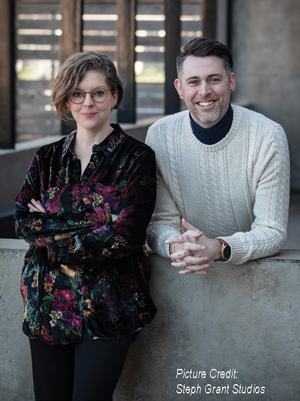
 Anna Clark-Miller, Co-Owner and Josh Miller, Co-Owner
In a recent interview with Manage HR, Josh Miller and Anna Clark-Miller, co-owners of Empathy Paradigm, shed light on how they help clients implement affordable and accessible training services to achieve their individual and corporate DEI goals.
Empathy is a Key Ingredient of DEI
Josh: Our approach to DEI work is founded on understanding our clients as people with unique needs rather than using a one-size-fits-all checklist of DEI goals. Emotional intelligence, inclusivity, wellness, and growth are pillars of a healthy workplace, and they all begin with empathy. We empower our clients to reach their goals by prioritizing genuine curiosity and vulnerability as they work to understand their corporate brand identity and the individual identities of their employees.
Our services include one-time workshops, multi-day conferences, and recurring trainings on inclusive and trauma-informed leadership development. Clients can schedule one-on-one sessions with our specialized Executive Development coaches for vital support and feedback, and all our services are tailored to fit each of their needs.
Challenges Prevailing in the DEI Space
Anna: Various social movements over the past few years and the outbreak of the COVID-19 pandemic have greatly increased global awareness of the vital importance of mental health, not just in our personal lives, but professionally. Executive teams that are struggling to cope with a global traumatic event are also navigating a workforce that is advocating for healthier work cultures. While psychological safety isn’t a new concept, its emphasis in the workplace has increased exponentially and left many scrambling to implement best practices that reflect the demand. As mental health professionals, we’re uniquely equipped to support leadership teams in the post-pandemic workplace.
It’s also important to note that experiences of trauma, harassment, and discrimination are all very subjective and impact each individual in unique ways. When DEI initiatives use the oversimplified one-size-fits-all approach we’ve been seeing, the individual experiences of employees can be overlooked and the underlying issues remain unresolved. That’s why we focus on investigating the unique circumstances impacting our clients and help them implement informed policies and create safe environments that are customized to their needs.
Building Empathy for a Holistic DEI Workplace
Josh: Our approach to DEI focuses on understanding our clients as people rather than the checkbox approach we mentioned earlier. We prioritize genuine human connection, curiosity, and vulnerability as we train leadership teams to investigate the feedback they’re receiving from employees. When team members express they’re feeling excluded or harassed, an empathetic response from leadership is crucial. Our signature Empathy Equation is a simple formula that can help anyone access, grow, and express empathy. It allows us to understand why someone is thinking, feeling, and acting the way they are based on their identity, past experiences, and current circumstances. Even though we may not always agree, empathetic understanding is the first step toward building connection and a work culture of mutual respect.
I think there’s a fairly common misunderstanding of empathy that’s expressed in the adage about walking a mile in someone else’s shoes. The takeaway is that we’ll care about someone if we experience what they’ve experienced, but empathy doesn’t rely on exact shared experiences. It can’t. Like Anna mentioned earlier, trauma, harassment, and discrimination are subjective. We don’t need to walk in someone else’s shoes, we just need to care about where those shoes have been and let that inform our understanding of the person wearing them.
Acing Agile Customer Collaborations
Josh: Our intentional commitment to creating a safe and trusting environment for our clients sets us apart. We invest time in understanding the actual underlying needs rather than making quick fixes that aren’t sustainable. Before discussing a plan, we schedule consultation calls with all prospective clients to be intentional about getting information and ensuring that we are the best fit for them.
We utilize mental health models, such as readiness to change, to assess our client’s understanding of the problem and ensure that we are aligned in our goals for creating trauma-informed policies and practices. We recognize that not all teams are beginning this process from the same starting point, and we work to be sensitive and respectful as we make our service proposals. We use a series of carefully crafted questions to assess and diagnose the underlying issues that DEI training can address. Once we understand their needs and goals, we build a custom-curated package.
Charting Customer Success Milestones
Anna: Most of our clients are already very empathetic and motivated to continue improving the psychological safety of their workplace. Our goal is to harness those good intentions, challenge them to think in new ways, question possible biases, and continue to grow, even if they have undergone other inclusivity training in the past.
Josh: Because every client and training package is unique, milestones aren’t pre-determined. Oftentimes, the true goals aren’t clear until we’ve built a trusting relationship that encourages the vulnerability and curiosity it takes to rethink as we learn and grow.
Genuine empathy, curiosity, and validation are our best tools for creating psychological safety
Recently, I worked with an Executive Development client that was brand new to C-suite leadership positions. They were hired right out of their program into a C-suite role and were pretty intimidated by the new responsibilities. They initially asked me to help develop a few leadership skills like contract negotiation and team management, but we didn’t set those goals in stone. We started our sessions with identity work, exploring my client’s understanding of leadership and the type of leader they wanted to be. They quickly realized their definition of a leader was heavily defined by external sources, not all of which were healthy, and needed to bedeconstructed. Our goals for coaching sessions then shifted accordingly.
My client’s vulnerability in those early sessions combined with my curiosity kickstarted our discovery of their true goals. I could have easily taught them how to be an effective interviewer and leverage team strengths, but what good are skills without context informing them? Most can mimic an action to get a desired outcome, but having a contextual understanding of why the action creates the desired outcome will set someone up for long term success.
Charting the Path Ahead
Josh: In our effort to be a one-stop shop for clients that have diverse needs, we have a team of contractors with diverse backgrounds and expertise. In cases where Anna and I aren’t the best fit for our clients, we work hard to pair them with a contractor who is experienced in the niche they want to address. If we don’t have someone from our own team, we’ll refer to a trusted organization we partner with.
Anna: Our mental health and crisis intervention backgrounds set Empathy Paradigm apart from other DEI consultants. We use an empathy framework to get to know each individual for their unique identities and experiences rather than focusing on the demographic they fall under. Our connection-oriented approach allows leaders to cultivate a flexible and non-judgmental mindset that makes DEI initiatives much more effective. We encourage our clients to normalize questioning their assumptions as they investigate the diverse experiences of those on their team. Genuine empathy, curiosity, and validation are our best tools for creating psychological safety.

