
Manage HR Magazine: Specials Magazine
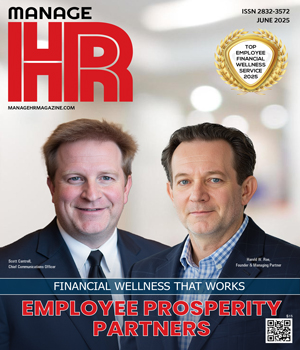
In today’s evolving workplace, the importance of holistic employee support has come into sharp focus. While companies have long recognized the value of providing healthcare and retirement benefits, one area has historically been overlooked, and it’s proving to be one of the most critical. Financial stress is taking a silent but significant toll on American workers, and by extension, on the organizations that employ them. From reduced productivity to increased absenteeism and costly turnover, the ripple effects are substantial. That’s why Employee Prosperity Partners (EPP) is gaining national attention – and why Manage HR Magazine has recognized the firm as the top financial wellness provider in the country. EPP is helping its client companies transform their approach to employee support by offering something most programs fail to deliver: a financial wellness program that actually works. The Cost of Financial Stress: A Hidden Organizational Burden According to PWC’s 2023 Employee Financial Wellness Survey (https://www.pwc.com/us/financialwellness), nearly 60 percent of full-time employees report being stressed about their finances. This stress does not discriminate by income level – more than 47 percent of employees earning over $100,000 per year also feel its effects. Financial stress manifests in many ways, such as anxiety, distraction, lack of sleep and difficulty concentrating on the job. These personal challenges translate into business costs. Financially stressed employees are five times more likely to be distracted at work. They spend hours each week managing personal finances on company time, often more than three hours weekly. For organizations with hundreds or thousands of employees, the cost of this lost productivity can climb into the millions. Beyond that, financially stressed employees are twice as likely to seek new employment. Despite the mounting evidence that employees need more help, only a small fraction of employees feel supported. While 90 percent of employers report having a financial wellness strategy, only 10 percent of employees say they’ve received adequate help. The result is a growing divide between employer intention and employee experience. EPP’s Mission: Moving Beyond Good Intentions Founded by Harold Roe, a Harvard MBA and author of the Amazon No.1 Best Selling Book Maximum Prosperity, along with business strategist Scott Cantrell, EPP is addressing this problem with a mission-driven approach. Their belief is simple. Employers who help employees create financial stability and prosperity will build stronger, more productive teams. “Our goal is to give employees what they truly need,” says Roe. “Not more information, but real education and guidance. Not passive tools, but proactive help. We want every worker to feel like they have a path to financial security – and a life-long partner to walk it with them.” EPP teaches its proprietary, step-by-step content derived from Maximum Prosperity in workshop format, meeting employees face-to-face and, as they choose, pairing every participant who desires to implement its methodology with a dedicated financial planner. Spouses are encouraged to attend both the workshop and financial planning sessions, reinforcing financial clarity at home and making planning a true family affair.
HCM TradeSeal
Helping Employers Master Prevailing Wage Compliance
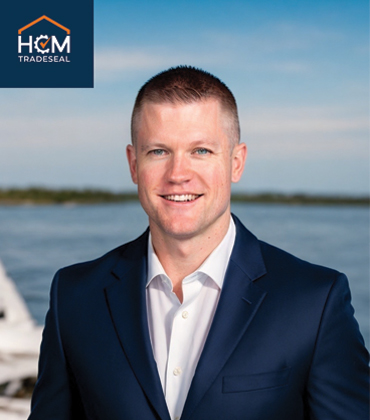
Steve Fentriss, CEO and Co-Founder
The shift from manual, error-prone processes to automation is now essential for employers managing prevailing wage, certified payroll, and union labor obligations. HCM TradeSeal, a purpose-built compliance technology company, is changing how organizations meet these demands. By helping businesses streamline prevailing wage and union payroll obligations through automation, integration, and intelligent workflows, the company enables employers to comply with federal and state prevailing wage laws and scale more confidently in competitive labor markets. HCM TradeSeal was founded to simplify prevailing wage compliance for companies working on public projects across complex legal jurisdictions. From large national contractors to specialized utilities and service providers, its platform, TradeSeal, has earned recognition for helping reduce compliance errors, simplify reporting, and future-proof internal payroll operations. One such client—a 5,000-employee enterprise operating across multiple states, unions, and systems like Viewpoint Vista—successfully leveraged the platform to unify its compliance processes and reduce risk at scale. While many tools treat compliance as secondary, TradeSeal is purpose-built for prevailing wage and union workforce management complexities. Companies in these sectors often face a patchwork of regulations—from state-specific wage determinations to local union agreements and fringe benefit reporting standards. Managing these manually or through generic HR and payroll tools increases noncompliance risk, slows down internal processes, and puts undue strain on administrative teams. TradeSeal addresses this by integrating directly with existing ERP and payroll platforms, ensuring seamless data exchange through robust APIs. It offers advanced compliance tools, like a rate validation screen that verifies wages based on job classification, location, and project terms before payroll processing. The platform also auto-validates timecards, worker classifications, and fringe benefit rates, helping resolve discrepancies early. The solution's support for nuanced scenarios like multi-role assignments, city-specific union terms, and intricate wage tables makes it especially powerful. TradeSeal’s flexible compliance logic ensures these cases are handled accurately and consistently. It even includes an AI-powered wage setup feature that automatically interprets and digitizes new union agreements, translating complex contract language into system-ready rules..read more
Background Screening

When an employee is selected for a random breath alcohol test or urine drug screen, most employers require them to travel to a designated clinic or testing facility to complete the procedure. Take John, for example. With a packed schedule, the last thing he expected was to lose half his workday to a routine drug screening. Driving across town, waiting in a crowded clinic and falling behind on work left him frustrated. Midlands Testing, a 24/7 on-site drug and alcohol testing provider, is leading the charge in revamping the existing tedious process. As a trusted service provider, the company offers a combination of product and services aimed at eliminating the need for off-site screenings. “Our drug testing services maximizes productivity while minimizing liability. We uphold test integrity by eliminating delays and reducing the risk of tampering,” says Lorelee Byrd, CEO. The company has an extensive network of over 600 DOT-certified collectors is strategically positioned across 49 states to ensure rapid and efficient drug and alcohol testing. These professionals are trained to handle testing in compliance with strict federal regulations. They are further supported by a 24/7 expert helpline, where compliance specialists are available in real time to resolve issues that arise during testing. The company’s proprietary platform, Dottie is an integral part of its holistic approach to streamlining drug tests. It offers an intelligent scheduling system designed to address the logistical difficulties of coordinating tests across different locations and time zones. Employers can set up tests through an automated system and the built-in reminder notification feature reduces the risk of missed tests, helping companies meet strict regulatory requirements. A notable example involves a large railroad company that implemented Midlands Testing Services’ ‘Click to Schedule’ feature to streamline drug and alcohol test scheduling. Previously, managers scheduled tests manually via phone, leading to time consumption and errors like misheard addresses. The system eliminated location errors by allowing managers to select pre-approved test sites with a single click. After automating scheduling, the company also saved at least $250,000 in labor costs..read more
Employee Wellness

Identifying High Potential Employees: Unveiling the Three Key Attributes for Success
Wes Griffith, Senior Director of Customer Experience, Coinbase
Employee Wellness

Upskilling: Why Do You Need It?
Jennifer Farinha, Human Resources Director, The Chefs’ Warehouse
Executive Search

Strategies for Success in a Changing Employee Health and Benefits Landscape
Erich J. Catzere, Vice President, Employee Health & Benefits, Marsh McLennan Agency
Employee Wellness

Pre-Employment Screening - The Intersection of Compliance, Safety and Diversity
Bridget Hawkins, Director of HR Compliance and Employee Relations, Hood Container
Employee Wellness
Human Resources - Training and Development
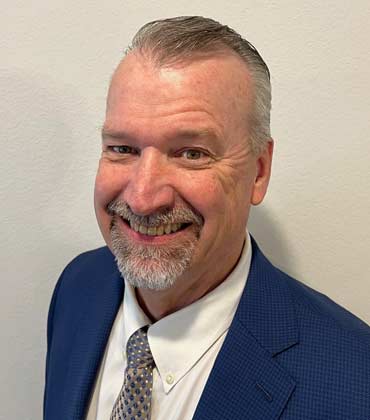
Don Beck, Human Resources Manager, AutoZone
Recruitment

Corporate Relocation - Move from Success to Significance!
Bruce W. Waller, Vice President, Corporate Relocation, the Armstrong Company
Executive Search

Navigating Challenges and Trends in Health Insurance Leadership
Alan Derow, Sr. Manager, Benefits, Irvine Company
Executive Search

Transforming Benefits and Leave Administration for Employee Well-being
Janocqua Shaw, Director, Benefits & Leave Administration, The Save Mart Companies
Employee Wellness

Shaping the Future of Banking, A Culture-First Approach by ConnectOne Bank's Leadership
Kimberly Sayther, Vice President of Learning & Development, and Maria Gendelman, Chief Culture Officer, ConnectOne Bank

IN MY OPINION
Employee Wellness
Managing Worker Performance in a Nursing Home Setting
Carrie Cherveny, Esq. Chief Compliance Officer & SVP Strategic Solutions, HUB International

LAST WORD
Executive Search
Engaging Employees In Benefits Education
Ferne Emery, Vice President Health & Benefits Compliance Officer, Pinnacle Financial Partners
IN FOCUS


EDITORIAL
Building a Resilient Workforce through Smarter HR Solutions
The HR industry is experiencing a dynamic transformation driven by the pressures of increasing regulatory complexity and rising employee expectations. As organizations strive to remain compliant, competitive and attractive to potential talent, the industry has turned to innovative technology and smarter solutions to deliver more responsive and efficient systems.
In this edition of Manage HR, we explore the recent developments in the space and how companies harness cutting-edge technologies to stay ahead.
One of the most critical areas of focus has been the challenge of prevailing wage compliance. Employers engaged in public works or union projects must navigate a complex web of federal and state laws that govern wage rates, fringe benefits and detailed reporting standards.
Historically, managing these obligations has been resource-intensive, time-consuming and prone to costly errors. Advanced compliance technology is changing this narrative. By automating calculations, integrating seamlessly with existing payroll systems and deploying intelligent workflows, businesses can now meet their compliance obligations with greater accuracy and efficiency.
Simultaneously, organizations are rethinking and redefining how they support their employees beyond traditional methods of compensation and benefits. Financial stress continues to be a significant concern among workers, adversely affecting productivity, morale and overall employee retention rates.
In response to this pressing issue, many companies are turning to comprehensive financial wellness programs as an essential component of their HR strategy. These programs are designed with the goal of promoting long-term financial well-being among employees. They offer a suite of services that include access to budgeting tools, personalized financial education, debt management resources, and tailored counseling—all created to help individuals gain greater control over their financial futures.
Random drug and alcohol testing has become necessary to maintain the highest standards of professionalism in the workplace. However, most employers require employees to travel to far-off designated clinics or testing facilities to complete the test. Organizations can now streamline the process by using electronic tools to schedule the test, establish a clear and consistent drug testing policy and offer on-site testing or fast-track services.
The convergence of compliance automation and employee-centric solutions marks a significant leap forward for the HR industry as a whole. As regulatory demands continue to grow more complex and the workforce becomes increasingly value-driven, companies must adopt systems that are not only operationally sound but also genuinely people-focused.
We hope this edition of Manage HR helps you find the right partner for your business requirements.

Be first to read the latest tech news, Industry Leader's Insights, and CIO interviews of medium and large enterprises exclusively from Manage HR Magazine
