

Reyna Silvia Salguero Tobar
Corporate Human Resources Director, Magdalena
Making Culture a Shared Responsibility
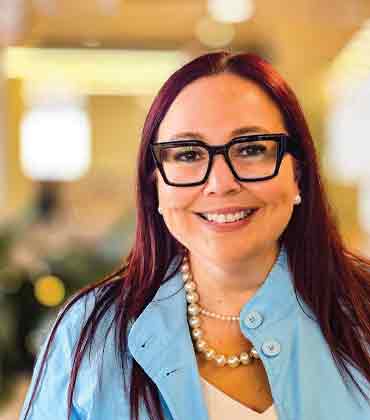
Reyna Silvia Salguero Tobar brings human resources management and organizational development experience to Magdalena. As Human Resources Director, she turns organizational change into something Magdalena’s people help build, not something handed down to them, across culture, inclusion, talent development and future skills. Her approach connects shared purpose with individual belonging, helping Magdalena build inclusive, resilient and people-centered practices that outlast any single initiative.
People at the Center of Change
Every transformation Salguero Tobar leads begins with the same test. Do the people inside it see themselves where it leads?
Systems move on a project timeline. People move at the speed of trust and Salguero Tobar has built her career on closing that distance, giving employees the confidence and resilience to treat change as something they shape, not something that happens to them.
For Salguero Tobar, this is where HR enters the picture, present at the point where business direction meets daily experience, not arriving afterward as policy. In Guatemala, Portugal and Peru, that presence becomes the difference between a memo people skim and a culture they actually live.
Building Culture Across Borders
The hardest problem in Magdalena’s cultural rollout was never the policy. It was about persuading three countries and three histories to recognize themselves within a single identity, without any of them disappearing into it.
Salguero Tobar’s response was to resist the instinct to lead with instruction. Instead, she opened the process to the people who would have to live the culture every day. Employees in each country helped define what Magdalena’s values should look like on their own ground, through inclusion, equity and collaboration, so alignment did not feel like something sent from headquarters. It felt like something they had helped build.
What endured after the rollout matters just as much as the rollout itself. Employees did not simply repeat Magdalena’s values back to the organization; they began to recognize themselves inside them. For Salguero Tobar, that was the point. A culture only becomes real when people stop seeing it as something handed to them and begin treating it as something they carry, protect and shape together, long after the launch event has ended.
Preparing People for 2030
Magdalena’s 2030 strategy hands HR a harder question than any policy could answer alone, what skills its people will need in a global, science-driven business and whether they will have them before the business does.
Upskilling and reskilling supply the mechanics. The real shift Salguero Tobar is after runs deeper, in how people see their own place inside the plan. She wants employees to see themselves as protagonists of Magdalena’s 2030 journey, not spectators watching it unfold from the sidelines.
“When trust is built, change is no longer something imposed. It becomes something shared.”
HR, in her framing, is the bridge that carries strategy to people, the place where a long-term goal becomes the reason someone builds a new skill this quarter. Investment in talent is that bridge, build one employee and make one decision at a time.
Trust Before Transformation
Cross-border change, for Salguero Tobar, starts long before any announcement reaches an inbox. It starts with whether people already trust the person who asks them to change.
That is why her approach to trust is deliberate, almost architectural. Across the markets Magdalena serves, Salguero Tobar treats communication as a leadership discipline. She describes leaders communicating seven times, in seven ways, through seven channels, until the message meant for everyone has truly reached everyone. To her, repetition is not noise. It is respect, a way of removing uncertainty before it turns into resistance and of showing people that change will not move faster than their ability to understand and own it.
Leadership, as she practices it, demands humility when the answer isn’t obvious, adaptability when the usual method doesn’t fit a given team and a vision clear enough to unite three countries without asking any one of them to sound the same. Diversity becomes a source of creativity and resilience only once people feel heard. “When trust is built, change is no longer something imposed. It becomes something shared.”

Be first to read the latest tech news, Industry Leader's Insights, and CIO interviews of medium and large enterprises exclusively from Manage HR Magazine
