

Molly Freeman
Senior Director, People Operations, Global Partners
The People Strategy Behind Lasting Business Performance
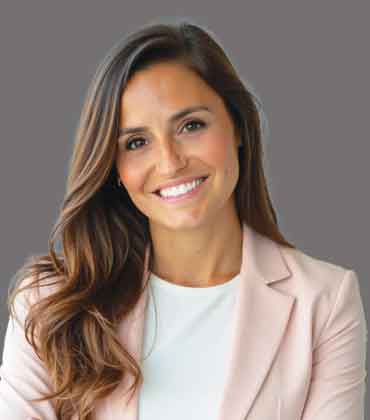
Molly Freeman is a strategic HR leader with extensive experience across retail operations, human resources, leadership development and organizational strategy. As the Senior Director of People Operations at Global Partners, she supports the corporate retail team and oversees field HR and Asset Protection Business Partners, focusing on people development, organizational effectiveness, and business performance.
Human resources was not Freeman’s original career plan. Her path into HR emerged from years of seeing firsthand how people, leadership and business performance intersect.
After graduating from Union College, Freeman began her career at Target through its Executive Leadership Program. Over 13 years, she held six leadership roles, predominantly in operations. Her roles included responsibility for a $30 million store, followed by one of the company’s highest-volume $100 million store and eventually a Group Operations Director role of the Northeast.
Along the way, she repeatedly gravitated toward mentoring, teaching and developing people. That realization led her to shift from pursuing an MBA to earning a master’s degree in organizational leadership. Today, she has found the niche where she thrives: the people side of the business.
Finding Space for People Amid Organizational Change
Freeman’s people-first approach was tested during Global Partners’ recent organizational redesign. As the company expanded several divisions, certain teams moved from retail and other functions into the growing division, requiring changes to leadership structures, reporting relationships and responsibilities.
Freeman played a significant role in the redesign. She worked closely with leaders to identify the structural shifts needed, redesign leadership responsibilities and clarify roles and expectations. Where responsibilities overlapped, the team identified opportunities to create greater efficiency while, in some cases, creating new roles and career opportunities.
Freeman then connected these organizational changes with succession planning, looking for talent that could step into newly created roles or evolving positions.
Just as important was helping employees understand why the changes were happening. Changes to positions and reporting structures created uncertainty among some retail teams. Freeman supported employees as they worked through those concerns, holding individual and team conversations to explain how the new structure supported the broader business strategy.
“ We want leaders to help their team members build careers, not just build a role. “
For Freeman, organizational transformation is not simply about moving boxes on an organizational chart. It is about helping people understand where they fit and how their work contributes to the company’s direction.
Creating the Conditions for High Performance
High-performing teams, Freeman believes, require more than talented individuals. They require an environment that allows those individuals to perform at their best. She has always strived to build environments that start with recruiting strong talent and developing capable leaders.
She believes employees need clear roles, the right resources and the tools to succeed, supported by a culture grounded in respect, accountability and integrity.
Freeman has led diverse teams supporting retail operations, corporate functions and asset protection, each with its own priorities and responsibilities. Despite their differences, she sees common fundamentals across them all: strong relationships, shared goals, recognition of individual strengths and a culture where people feel both trusted and valued.
Her goal is to create alignment among teams without erasing the differences that make each function effective.
Making Growth Part of the Employee Experience
According to Freeman, hiring is only the beginning of an employee’s relationship with an organization.
She wants leaders to help their team members build careers, not just build a role. When employees can see a future within the organization, they are more likely to feel engaged, recognized and invested in, which Freeman believes naturally supports retention.
“ Organizational transformation is not simply about moving boxes on a chart. It is about helping people understand where they fit and how their work contributes to the company’s direction. “
She believes employees should understand that the organization is invested in their development and that meaningful opportunities exist for them to continue growing. Creating that visibility around career opportunities can help employees see how their current role connects to their longerterm aspirations.
Freeman advocates for a range of talent development tools, including 9 Box assessments, MBTI (Myers Briggs Type Indicator), talent reviews and succession planning. Used thoughtfully, these tools give leaders greater visibility into emerging talent while helping identify high-potential employees who may benefit from individualized development plans.
Ultimately, she views development not as a one-time initiative, but as an ongoing part of the employee experience and a critical component of building a strong talent pipeline.
Leading Change with Honesty and Trust
People strategy becomes particularly important when organizations face difficult decisions. Freeman’s guiding principles in those moments are people-first leadership, integrity and honesty.
She acknowledges that employees want to be heard and informed. They want to understand what is happening and, perhaps most importantly, why it is happening. During periods of significant change or difficult feedback, Freeman believes leaders have a responsibility to communicate directly while creating space for people to express concerns.
Her message is to approach change with “calm curiosity.” Change can be overwhelming, she recognizes, but approaching it with curiosity can also reveal opportunities that were not visible before. The goal is not to minimize uncertainty or dismiss concerns, but to create enough trust for people to navigate change with confidence.
For Freeman, effective change leadership means balancing transparency with empathy and recognizing that how an organization manages change can be just as important as the change itself.
Aligning People Strategy with Business Strategy
Freeman does not view people priorities and business priorities as competing agendas. To her, effective strategic HR leadership requires bringing them together.
That starts with understanding what the organization is trying to accomplish, whether the challenge involves cost management, organizational transformation, acquisitions or improving performance. HR initiatives should then be designed around those needs rather than implemented simply because they are standard HR practices.
Her experience spans succession planning, compensation programs, engagement strategies, workforce planning and acquisition-related initiatives. In each case, she approaches the work through a people-focused lens while keeping the underlying business challenge at the center.
A people-first approach is most effective when HR leaders have credibility with operational leaders and understand the language of the business including its financial and operational realities. That credibility allows HR to serve not only as a resource for employees and leaders, but as a strategic partner in achieving business outcomes.
Investing in Leaders to Strengthen Performance
One of Freeman’s most impactful initiatives at Global Partners came early in her tenure, when she recognized an opportunity to strengthen connection and engagement among the field leaders managing gas station and convenience store locations.
With executive support, she planned, organized and conducted a two-day General Manager leadership conference that brought approximately 500 leaders together. The event combined leadership sessions, executive-led breakouts, motivational speakers, employee resource groups, support-team interactions, a vendor expo and an awards dinner recognizing managers.
The response underscored the value of bringing leaders together not only to share information, but to build connection, recognition and a stronger sense of belonging. The conference was successful enough that Freeman was asked to make it an annual event.
Since then, these leadership gatherings have also become forums for launching programs, aligning priorities and gathering feedback from the field. In one instance, IT leaders used the sessions to hear directly about operational pain points and work with field leaders to shape future strategies. General Manager turnover has also trended downward since the meetings began.
The experience reinforced Freeman’s belief that investing in leaders is an investment in organizational performance. Creating opportunities for leaders to connect, learn from one another and engage directly with senior executives can strengthen alignment while giving the organization valuable insight from the field.
Investing time and resources in people can pay back through stronger engagement, collaboration and performance. That philosophy continues to define Freeman’s approach to people operations.
Whether navigating organizational change, developing future leaders or creating stronger connections across functions, Freeman returns to the same premise: people perform their best when they feel valued and trusted, understand how their work connects to the business and can see meaningful opportunities to grow.
For Freeman, the most effective people strategies are those that translate directly into business outcomes, stronger leaders, more engaged teams, greater organizational agility and, ultimately, sustainable performance.

Be first to read the latest tech news, Industry Leader's Insights, and CIO interviews of medium and large enterprises exclusively from Manage HR Magazine
