

Liz Santangelo
Human Resource Director, Icon International
The Balance Between Managing People and Growing Them
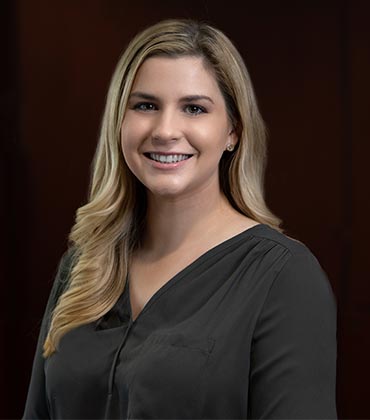
HR occupies a difficult space between employees’ interests and the business’s demands, which don’t always align. Liz Santangelo holds both in the same frame, because organizational strength depends on keeping the two in workable balance.
Her years in ICON’s HR ranks added depth to her approach. Each step, from coordinator to Human Resources Director, developed a broader perspective on how employee development and business goals intersect. Today, she oversees core HR work, including talent acquisition and culture initiatives, at ICON, a company celebrating 40 years with average employee tenure of roughly eight years.
She associates that longevity with a culture built around trust, belonging and its people. HR, as she practices it, is less about enforcing rules than about creating a workplace where people feel heard and respected, and remain accountable to organizational goals. She has spent her career turning that principle into practice, shaping an employee experience in which people have reason to stay back and grow.
From Managing People to Understanding Them
When Santangelo joined ICON, HR seemed to her a discipline shaped by policies and processes. Working closely with the company’s SVP of HR gradually refined that outlook of what it should accomplish, an influence she remembers with warmth and appreciation. She recognized that an employee-centric culture and business strategy were not competing priorities, but complementary forces through which employee growth could strengthen the business.
The balance inherent in HR lies between business priorities and employee needs, whose interests do not always coincide. Santangelo weighs human impact against business priorities, goals and culture, ensuring neither side is treated as secondary, even when some choices inevitably favor one side
Navigating that tension meant building HR around listening and feedback. Through annual engagement surveys, the team gathers candid views on the good and bad, the challenges employees face, and what they hope would change. When younger workers asked for frequent and substantive feedback from their managers, Santangelo took it as a signal to act, adding a mid-year performance review alongside the existing annual cycle.
The new performance rhythm gave employees a chance to be heard sooner, exchange feedback, recognize strong work and correct course before it was too late. Engagement rose afterward, offering a modest measure of what timely attention can achieve.
Retention Starts With Respect and Development
Santangelo’s approach to talent retention rests on a lesson gathered over years of experience. People stay where they feel they belong, and that belonging is nurtured through consistent actions that foster long-term commitment.
Throughout her career at ICON, she has built quality relationships with employees and kept an open door for concerns, advice and workplace challenges. She believes ICON’s company culture of open communication and support has contributed to the company’s strong employee tenure, making them less inclined to leave.
“Being employee-centric doesn’t mean saying yes to every request. It means balancing respect, accountability, growth, and the needs of the business.”
Santangelo regards manager development as a means of strengthening the HR function itself. She equips leaders to address performance gaps without diminishing the people involved, while sessions held a couple of times each year help newer managers lead with empathy and accountability while staying aligned with business goals. Dale Carnegie programs and regular training empower employees with the confidence and capability to shoulder broader responsibilities. For her, the aim is to build an HR function that prepares people to act independently, embrace new challenges and step into future leadership.
Some of the employees who started alongside Santangelo at the entry level are now leading teams. For her, their progression is evidence of what sustained relationships, training, and a little room to find one’s footing can make possible
For Santangelo, growth begins with having a place worth returning to. ICON treats the employee experience as an investment; it is deliberate about preserving. Each year, it budgets for three outings, a holiday party, a bowling day and a summer gathering. While many companies have cut these types of occasions out of their budgets, Santangelo and her team see value in giving employees time to step away from their desks, reconnect and enjoy a welcome pause amid the demands of keeping clients happy and innovating. She also continues to advocate for benefits employees value, including maternity and paternity leave.
Investing in the AI-Shaped Workforce
The workplace is still changing, and Santangelo sees helping people adapt as an HR responsibility. ICON remains largely office-based, even as its Connecticut presence and expanded Fort Lauderdale office have widened the talent pool. That geographic reach creates new hiring opportunities while also requiring HR to remain attuned to evolving expectations around workplace flexibility and the employee experience.
Technology presents a similar test of preparation. Santangelo believes AI will become as familiar and unremarkable as Microsoft Word, but only for organizations willing to invest in proper and safe AI training. Without that investment, employees can fall behind, and companies may miss the practical gains AI can bring to elevate the workforce. She sees its greatest value in handling repetitive tasks, including some data entry so that people can devote more time to strategy, judgment, and elevated human responsibilities.
On whether AI poses a threat to HR itself, Santangelo is clear. Technology can answer a factual question, but it cannot replace the essence of human interaction required to engage employees, navigate difficult workplace relationships, cultivate greater productivity and retain the right talent.
“Being employee-centric doesn’t mean saying yes to every request. It means balancing respect, accountability, growth, and the needs of the business,” says Santangelo.
Employees need fairness and transparency, along with room to grow, but she keeps those expectations tied to the needs of the business. The HR Leader of the Year 2026 recognition reflects that steady approach through stronger engagement, employee development and closer alignment with organizational vision. Her advice is simple: trust your instincts and do what is favorable for both people and the organization. For her, human judgment is not simply part of HR but a foundation for sustained performance.

Be first to read the latest tech news, Industry Leader's Insights, and CIO interviews of medium and large enterprises exclusively from Manage HR Magazine
