

Filomena Armeni
Director of Human Resources, Victaulic
Redefining HR through Leadership and Stability
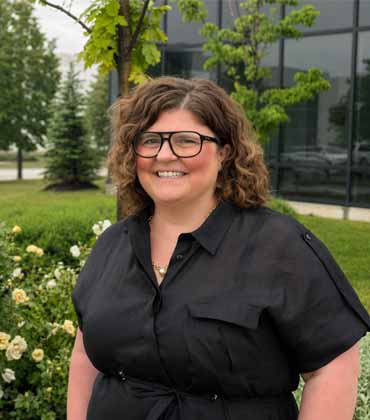
Filomena Armeni leads HR initiatives at Victaulic Canada, a global manufacturing leader headquartered in Easton, Pennsylvania. With a career spanning retail operations and industrial manufacturing, she has shaped HR into a strategic function built around frontline leadership, workforce stability, and holistic employee well-being. Here is our conversation with her.
From Transactions to Strategy
I began my HR career at the store level in retail, where success depended on operational precision, ensuring employees were paid accurately, benefits were administered effectively, and day-to-day workforce concerns were resolved consistently. That work matters, and it still does, but over time, I recognized that it was only one part of the picture.
What evolved for me was the ability to think several steps ahead. Strategic HR requires looking beyond immediate outcomes to anticipate how decisions shape organizational structure, employee experience, operational effectiveness, and long-term business performance. The ability to evaluate future impact is what transforms HR from a transactional function into a true strategic force.
Stability Starts on the Floor
In manufacturing, stability does not begin with policy but with the frontline supervisor. Employee engagement data consistently shows that frontline leaders are among the strongest influences on daily experience. While promotions often reflect operational expertise, long-term leadership success depends on people leadership skills. The key investment is in communication, coaching, and accountability, as these directly improve engagement, productivity, and retention.
Beyond leadership, stability also depends on employees feeling recognized, respected, and connected to the impact of their work. Compensation is the baseline, but sustained engagement comes from knowing contributions matter and influence product quality, customer outcomes, and organizational success. Physical safety is essential in manufacturing, but psychological safety is equally important. Employees must feel safe raising concerns, identifying issues, and speaking up without hesitation, because operational excellence depends not only on safe environments but also on cultures that empower people to protect them.
Building the Pipeline Intentionally
Early-career and internship programs are often treated as short-term staffing to cover seasonal demand. That approach overlooks how they can be used. I see these programs as a low-risk opportunity for an extended interview. They allow us to evaluate individuals over time as potential future hires, while also giving candidates the chance to experience the environment and decide whether it is the right fit. When someone chooses not to continue after that exposure, it signals a mismatch early, before it becomes a longer-term retention issue.
Seeing these programs this way changes how they should be designed. It requires being deliberate about who we bring in and what they are exposed to. When internships are treated as temporary support, the experience remains limited, and the signal is weak. When individuals are given meaningful work and real exposure to the organization, both sides gain clearer information. For early-career employees, that experience also shapes retention. Career development and visibility into future opportunities are key drivers. If individuals cannot see how they will grow within the organization, they are more likely to leave.
“Understanding the business is essential, but so is asking what a decision means for employees. When organizations lose sight of that, they do not just lose engagement. They lose trust, and trust is difficult to rebuild once it is gone.”
Wellness as a Cultural Commitment
Providing wellness tools and resources is a baseline expectation. Portals, EAP access, mental health education, and benefits literacy form the foundation. On their own, these tools do not shape day-today experience. Embedding wellness into culture depends on how leaders show up and engage with their teams.
That requires equipping leaders to have meaningful conversations and create spaces where mental health is not stigmatized. They also need to support employees who may be struggling physically or emotionally. At Victaulic, we have invested in building these capabilities because leaders are often the first point of contact when something is wrong, and the quality of that interaction determines whether employees feel supported or remain silent.
We have also extended this approach beyond employees to their families. When communicating benefits and wellness resources, we emphasize that these supports include families as well. An employee may be well personally, but challenges at home can affect focus, attendance, and well-being, making this a more complete view of employee health overall.
Navigating a Complex Labor Landscape
The workforce challenges we are navigating in Canada are not cyclical but structural, driven by demographic shifts, credential mismatches, and the geographic concentration of talent. In manufacturing, this is most visible as a shortage of skilled labor. Addressing it requires more than short-term hiring fixes. It demands sustained partnerships with educational institutions and a compensation approach that reflects market realities.
This also shows up in entry-level hiring. At Victaulic Canada, we rely meaningfully on newcomers to Canada for manufacturing roles. They bring relevant education, technical skills, and perspectives that strengthen our teams. However, language barriers can cause capable candidates to be overlooked. We have removed that constraint. If a candidate has the right attitude, skills, and ability to learn, we hire them and provide language training and resources to support their development, expanding the talent pool without lowering standards.
Regulatory complexity adds another layer. Operating across provinces requires staying current on evolving legislation, including Bill 96 in Quebec, along with pay equity and pay transparency laws. These are ongoing obligations that require continuous attention to maintain compliance and consistency across the organization.
The Work That Matters Most
Two areas of work stand out to me as what I am most proud of. The first is the manager toolkit series we built at Victaulic. In many organizations, leadership development is nomination-based and designed as large-scale, transformational programming. What we created is more accessible and immediately practical. It is built around observed capability gaps and direct feedback from leaders on where they need support. Engagement has remained consistently strong because the content addresses real, day-to-day challenges faced by frontline leaders.
The second is our work around holistic well-being. This has included launching a wellness program, modernizing our benefits offering, and developing a dedicated app in partnership with an external provider to enable employees to access their well-being resources in one place. The focus is not only on coverage of health needs but also on preventive tools for nutrition, exercise, and overall wellness. The intent is to support employees in maintaining their health, not only responding when issues arise.
Advice for the Next Generation of HR Leaders
To emerging HR professionals who aspire to executive roles, I would offer four things. First, get comfortable with data. Numbers tell stories, and the ability to use data to build a business case or defend a program is essential to being viewed as a credible strategic partner. Second, learn to navigate the gray. It is tempting to look for clear rules or binary answers, but the most consequential HR decisions rarely present themselves that way. You have to weigh competing variables, work through ambiguity, and still arrive at a sound, defensible decision. This capability is built through experience and reflection, not in a classroom.
Third, HR leaders are constantly navigating change themselves while also being responsible for guiding others through it. So, embrace change as a core part of the role. That dual responsibility requires self-awareness, adaptability, and the ability to remain steady and clear even when the path forward is not fully defined.
And finally, never lose sight of the human in human resources. As the function becomes more strategic and data-driven, there is a risk of optimizing systems at the expense of the people within them. Understanding the business is essential, but so is asking what a decision means for employees. When organizations lose sight of that, they do not just lose engagement. They lose trust, and trust is difficult to rebuild once it is gone.

Be first to read the latest tech news, Industry Leader's Insights, and CIO interviews of medium and large enterprises exclusively from Manage HR Magazine
