

Debra Verbeke
EVP, Human Resources, Fairfield County Bank
Placing People at the Heart of Performance
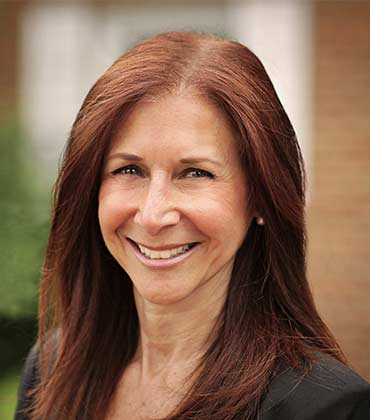
Debra Verbeke brings a broad business perspective to people leadership, shaped by experience across industries. Over more than two decades in community banking, she has developed an approach that connects employee growth and trust with lasting business performance.
Verbeke’s career has taken her from large global organizations to community banking, where communication is more personal and direct. At Fairfield County Bank, she believes the emphasis on building individual customer relationships must extend to employees, too. When employees feel valued, they serve customers better.
Building Careers beyond Traditional Paths
Understanding the business is central to Verbeke’s approach to HR. Over the course of her career, she learned that employees across locations have different needs and challenges. Corporate goals cannot be achieved without understanding employees’ circumstances and concerns.
At a bank with more than 200 employees and an average workforce tenure of 11 years, career development requires a similarly practical perspective. A smaller organization has a narrower funnel for upward growth. Employees who expect to progress only through traditional, linear career paths may have to wait years for the next opportunity.
Fairfield County Bank uses internal and external learning programs that help employees broaden their skills and consider different career directions. Its Masterclass brings together people from different areas, including lending, finance and HR, to learn about other parts of the bank. The aim is to remove mental barriers that prevent employees from considering a role outside their area of expertise.
Jobs in a smaller organization are also elastic. When employees show interest and capability, the bank can expand their responsibilities to support their development and streamline work. During annual assessments, managers seek to identify what employees have mastered and the skills they would need to take on new responsibilities. The bank prioritizes building those skills and making meaningful changes in responsibilities through various forms of recognition.
Sustaining Trust through Change
For Verbeke, consistent communication and candid explanations helped preserve employee trust through changing circumstances. During the COVID-19 pandemic, the bank’s 18 branches were suddenly unable to admit customers, changing the nature of work for dozens of employees. Remote work, modified responsibilities and isolation created uncertainty across a workforce accustomed to seeing colleagues in person.
“Corporate goals cannot be achieved without understanding employees’ circumstances and concerns.”
Verbeke responded with grassroots communication every day during the first six months, reassuring them that their jobs were secure and support was available. Existing programs were also modified to accommodate employees’ changing needs and help them establish ergonomic home workspaces.
As employees returned to the office, she ensured the bank listened to their concerns and introduced a gradual transition. When they pointed out that they were coming into the office but still attending meetings virtually, the bank addressed it immediately. Today, the bank maintains a hybrid arrangement that balances employee needs with its community identity and the value of in-person service.
Connecting Empathy with Accountability
Verbeke believes an HR leader must balance advocacy for the business with advocacy for employees. Without understanding and supporting business goals, HR cannot contribute to the long-term sustainability of an organization. At the same time, a supportive culture must be backed by strong performance.
When Verbeke joined the bank in the early 2000s, customers often praised the employees for their friendly nature. She wanted them to recognize the workforce as highperforming, too. Having operated for 155 years, the bank has weathered significant economic and social changes. Verbeke sees sustaining that legacy for the next 150 years as a shared leadership responsibility, with growth and long-term sustainability remaining key priorities. The bank measures progress through its growth and customer responses. Its recognition as Connecticut’s best bank last year offered an indication that service and performance could reinforce each other.
Looking ahead, Verbeke believes HR leaders must advocate for the power of humans as AI becomes more useful in HR analytics and benchmarking. AI can amass data and make data analysis easier, but humans should make decisions affecting people with accountability for verifying the data.
She encourages younger professionals to follow talent, learn from people they trust and take risks. She believes HR leaders need business and financial acumen, an understanding of human behavior and the ability to build trust. Without trust, engagement and performance suffer. For her, trust begins with the basics: saying what one means, doing what one says and following through.
