



 Bill Synnot, Managing Director
Most organisations mistakenly think successful change management is an almost instantaneous action. However, the change journey requires ongoing, permanent attention that involves designing a proper change management framework and focusing on the human element, like emotional intelligence and soft skills, to ensure buy-in, ownership, collaboration, participation, co-creation, co-designing, etc from staff.
Also, for effective change, there needs to be alignment of the rational mind, emotions, and intuition of a person. Most organisations have too much focus on the rational elements.
So how can change be effectively handled? Enter BILL SYNNOT AND ASSOCIATES (BS&A). Founded in 1993 by Bill Synnot, a leading organizational change management specialist, BS&A today provides organizational change management, executive coaching, facilitation, training, creative thinking, organizational reviews, planning, mediation and team development services to its clients.
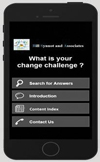
With decades of experience Bill and his team have worked with 700+ clients worldwide to enact change transformations. From this, BS&A has developed the Organisational Change Management Knowledge Base (KB)—a web-based app utilized by management professionals to learn about and enact Change Management in their organization from a simple web-search query (see https://www.billsynnotandassociates.com. au/knowledge-base.html)
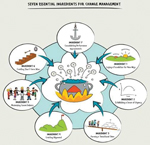 For successful change management BS&A has identified 7 essential ingredients
• laying a foundation for new ways,
• establishing a sense of urgency,
• forming a transitional team,
• creating alignment,
• maximizing connectedness,
• creating short-term wins,
• consolidating performance improvements—.
These ingredients help organisations bring every employee onto the same page for better-aligned change management.
“Importantly, we have integrated science into the art of change management. This enables us to go to the root cause of a challenge, eliminate it, and address any complex change management requirements,” Bill emphasizes. “For example, the field of neuroscience helps us understand how the brain works and awareness of this is pivotal for effective change management. The human element usually frustrates a change process, so being informed by neuroscience empowers us to tailor the framework appropriately. It’s vital to avoid management fads, and better to focus on research-based evidence.”
How is BS&A helping clients during the challenging time of the pandemic?
The pandemic has forced every organization to improve its digital footprint and utilise new business strategies, such as remote working — with limited preparedness. Needless to say, many organisations have faced challenges that hampered their transformation initiatives and consumed valuable resources like money, time, etc. Our 7 ingredients framework and KB are helping businesses to streamline their approach during these trying times.
Our online KB, which is being continually updated, enables clients to address their change challenges and find the most suitable strategies to implement change successfully. We already have 65,000+ users visiting our KB which contains about 2,000 pages of information from 3,000+ references. It explains how to use 100+ change frameworks and around 350 change implementation techniques. More importantly, its content is a result of our years of experience and helps clients have as seamless a journey as possible.
 Please shed light on your client engagement process.
Change management is a complex undertaking—involving everyone, from C-level executives to new recruits. As not all companies have the same expectations for, or experiences from, their transformation projects, there cannot be a “one-size-fits-all” approach. Our team of experts understands this, so we start the client engagement process by acquiring a comprehensive appreciation of the unique challenges the particular organisation faces. We speak with key stakeholders, especially staff, to gain a comprehensive knowledge of requirements, objectives, and expectations; then we co-design the most apt approach with our client. Our service is personalised, practical and tailored to a client’s specific needs.
Can you share with us some instances of clients’ success?
 An information and communications technology company was undergoing a major change. Previous changes efforts had created major internal problems. Working with the client, we guided key stakeholders, including leaders (formal and informal) and all potential trouble-makers, through a process involving scenario planning and other techniques to develop suitable strategies and action plans for each scenario. Finally, participants were asked to select the most appropriate future for their organization - all agreed on the same one!
In another instance, for several years BS&A helped an under-performing, energy utility company improve its performance. Eventually it was recognised, by the World Bank, as one of the region’s top-performing organisations.
A third example involves a defence industry organization. A new CEO was given 2 years to change the organization and spent the first year focusing, unsuccessfully, on technical challenges. BS&A was invited in to help in the second year. We changed the focus to soft skills. This succeeded and the CEO was promoted.
A fourth example involves a telephony company with aggressive union representatives who initially regarded the change process and their involvement as a waste of time. During the process, they changed their minds and became active change supporters.
The last example is a global aeronautical company that wanted its staff to be more creative. Its young, intelligent engineers were initially unreceptive. However, soon after the training, some participants used the recently learnt creative techniques to win a public competition.
What does the future hold for your company?
The pandemic and continuing disruptive technologies have created a VUCA (volatile, uncertainty, complexity and ambiguity) world. BS&A aims to help clients address their challenges, especially around people issues, in more creative, innovative, flexible, proactive, robust, resilient ways.

