



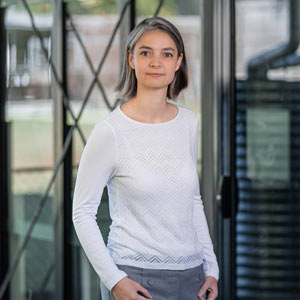
 Audrey Bevan, Founder
With its pragmatic, tailored, and timely practices, Accent HR is providing organizations with the ability to understand cultural nuances, mitigate associated risks, and enhance their performance. .
“We are passionate about creating an environment where all cultures are valued equally,” says Audrey Bevan, founder of Accent HR. “When people are supported and work within a culturally adapted environment, everyone wins - individuals perform at their best, teams work cohesively, and organizations thrive.”
Accent HR collaborates with organizations that recognize the significance of integrating cultural intelligence (the ability to adapt to different cultures) into their people practices.
The company tailors its services according to the specific requirements of its clients.. Whether they require foundational HR support, strategic customization of standards to align with the cultural context of employees, development of cultural intelligence within teams, or support in expanding into APAC countries, Accent HR works with clients to reach their ambitions.
Infusing the Spirit of Cultural Intelligence
“Our cultural background influences how we engage with others, how we manage our teams, and how we assess their performance,” says Bevan.
However, organizations worldwide tend to standardize HR practices. Even published HR best practices are culturally homogenous, being generally grounded in Anglo-Saxon cultures.
Bevan has first-hand knowledge of navigating cultural differences and effectively managing individuals from diverse backgrounds, gained from her extensive experience working across Europe and APAC for over 15 years. Having lead HR teams of 50 people, across a variety of countries she has extensive experience of the challenges that cultural diversity presents and how to leverage it for maximum impact. She holds a fellowship at the Australian HR Institute, and leverages her experience to create short-, medium-, and long-term goals for organisations that enable them to adapt their HR Practices to different cultures.
When people issues arise in the short term, Accent HR considers whether cultural differences are at the root of the problem. For example, a high proportion of poor performers in an organization could be from a specific culture or a culture different from the leadership group. It solves the issues by reviewing assessments, pointing out flaws or biases and recommending an equitable approach to solving the immediate challenge..
We Are Passionate About Creating An Environment Where All Cultures Are Valued Equally
In the long term, Accent HR works with organizations to develop their cultural intelligence at all levels and in all their people practices. This can be done through training, coaching, and experience. This skill set is crucial due to the increasingly interconnected nature of work and the normalization of remote working. The increased number of remote interactions managers have with their teams makes it harder for them to read social cues and learn to adapt to other cultures. . “Leaders who develop their cultural intelligence will have a crucial skill set to enable their team to successfully work across cultures, including when working remotely”, says Bevan.
Embedding Continuous Learning in Cultural Intelligence
Continuous learning only happens when it becomes a habit, and it should be embedded in all people practices. Accent HR proposes a strategic approach to integrating continuous learning around cultural intelligence by customizing it to the organization’s needs, unique context, challenges, and workforce diversity.
To ensure their approach is adapted to the organisation’s needs, Accent HR relies on four sources of information leadership, policies and process, data, and staff feedback.Accent HR’s team meets with senior leaders to get a sense of their appetite for change, their view of the challenge at hand, and the existing level of cultural intelligence. They collect diversity data and documents pertaining to HR policies and employment. The team also considers the information in employee relations statistics, preferably cross-referenced with diversity and inclusion data, along with engagement survey results, if available.
The Accent HR team then speaks to a sample of staff from all levels and business units to understand their views on how different cultures are attracted, included, supported, and valued in the organization.
Based on this information, Accent HR makes recommendations on how best to align their people practices with different cultures. As implementation of initiatives get underway, progress is monitored using the same sources of information and adjustments are made where required. Constantly monitoring, questioning assumptions and revisiting solutions ensures maximum impact is achieved. This methodology is consistently applied to foster continuous learning and improvement.
Cultural Integration and Inclusive Practices
An instance of Accent HR's proficiency in fostering inclusive workplaces can be found in its work with the Australian Aboriginal Child and Family Services (AACAFS).
An organization created by Aboriginal leaders, AACAFS aimed to infuse aboriginality into their employment practices. Australia's prevailing legal and best practices are predominantly Anglo-Saxon, which meant AACAFS did not feel they were adapted to the cultural identity they have and did not enable them to cater to the needs of the children they serve.
-
Our Cultural Background Influences How We Engage With Others, How We Manage Our Teams, And How We Assess Their Performance
Throughout the process, Accent HR placed paramount importance on actively listening and comprehending the visionary guidance of AACAFS's CEO. “It is crucial to recognize that no one is an expert in cultures that are not their own, humility in listening to others is the cornerstone to successfully working across cultures”, says Bevan. This collaborative approach combined HR expertise with cultural intelligence, resulting in the desired cultural alignment for AACAFS.
In another example, a two-pronged service was delivered to align Open Architecture Studio ’s HR practices with the cultural diversity the CEO had brought into the organization. Accent HR first reviewed the policies to remove the risk of misinterpretation while building flexibility for the studio . It then supported the CEO to develop his own cultural intelligence, and adapt his approach to staff management to obtain the best results when working with different team members.
These instances of success are a reflection of the company’s commitment to helping clients successfully achieve their ambitions.
Adapting to different cultures is crucial for businesses whether they are expanding into new countries or not. A partner like Accent HR can help them make a real difference. Treading ahead, it is poised to expand into environments characterized by unfamiliar cultural contexts and devise robust solutions to drive clients to the pinnacle of success.

