
Manage HR Magazine: Specials Magazine

What hidden factors influence business valuation beyond financial metrics and growth performance? When business owners prepare to sell, they focus on the visible: financials, growth metrics, and market position. Increasingly, however, what determines valuation sits beneath the surface—inside the company’s people, workflows, and ability to operate without its founder. A business may look strong on paper, yet still lose value in a transaction if key knowledge is concentrated in a few individuals, if workflows cannot transfer cleanly, or if teams are not equipped to operate in an AI-driven environment. For buyers, the question is no longer just what the company has achieved, but whether it can sustain and scale that performance after the transition. This is where GrowFast Advisory positions itself. Acting as a high-level diagnostic and preparation partner, the firm helps organizations identify hidden risks, strengthen operational continuity, and ensure that value is not only realized in a sale but preserved beyond it. It is often engaged in the pre-sale phase, helping business owners understand how AI, workforce readiness, and operational dependencies may impact valuation before going to market. “We enable organizations to preserve and enhance enterprise value amid AI-driven change through an integrated model that combines human capital strategy, AI-informed operating design, and valuation insight, while reducing key-person risk, strengthening operational resilience, and sustaining performance over time,” says Stephen Murray, president. From Succession Planning to Value Protection How does the firm’s framework assess succession readiness and organizational performance continuity? What GrowFast does differently begins with a fundamental shift in perspective. Succession is no longer treated as an internal HR exercise; it is approached as a direct driver of enterprise value. Traditional models focus on replacement. They ask who steps into a role when someone leaves. GrowFast reframes the question entirely. It asks whether the business can continue to perform when leadership changes, when workflows evolve, and when technology reshapes how decisions are made. This shift reflects what organizations are experiencing in real time. AI is not just improving efficiency; it is altering operating models at a pace that many businesses struggle to match. The risk is no longer limited to leadership gaps—it is about whether value itself can hold under pressure. GrowFast’s Valuation-Grade Succession™ framework addresses this challenge by introducing a proof-based model. It evaluates whether an organization can sustain performance through change, transfer knowledge effectively, and adapt roles as technology evolves. The model also estimates how effectively organizations are adopting AI by measuring skill readiness, governance, and the ability to sustain new workflows over time. It moves succession away from assumptions and toward evidence. At the core of this model is a shift from potential to proof. Traditional succession plans often rely on assumptions about readiness, future capability, or leadership promise. GrowFast instead focuses on demonstrated ability. It examines whether teams have already adapted, whether workflows are already transferable, and whether leaders can operate effectively within evolving, AI-enabled environments. This makes succession a strategic capability rather than a static plan. It becomes a way to protect value, not just preserve structure. Where Value Really Lives Why is identifying value-critical roles essential for understanding operational dependency and resilience? One of the most important insights behind GrowFast’s approach is that value does not sit neatly within job titles or organizational charts. It is often embedded in less visible parts of the business. It can be found in individuals who understand exceptions that systems do not capture. It exists in employees who connect legacy processes with new technologies. It lives in those who quietly maintain continuity across teams and functions. GrowFast begins by identifying these value-critical roles. This often reveals a disconnect between how companies think they operate and how they actually function. Businesses that appear stable may be far more dependent on specific individuals than they realize. This becomes even more significant in an AI-enabled environment. AI can automate tasks, accelerate analysis, and improve consistency. It cannot replace judgment, accountability, or trust. People remain central to decision-making and execution. “By separating tasks from roles, we ensure that organizations do not mistake efficiency gains for true readiness. Tasks evolve quickly; roles require deeper clarity and intentional design,” says Murray.

Corporate Training
What challenges are hotels facing in rebuilding sales capabilities after the pandemic? Success in hospitality now hinges on rebuilding capabilities. Post-pandemic, hotels faced suppressed demand, uncertainty and depleted teams. Despite improving business volumes, high turnover and the exit of experienced professionals have created a persistent skills gap, increasing reliance on newer or returning talent. As inquiries rise but conversions lag, the focus has shifted from advanced selling techniques to strengthening fundamentals to improve closure rates. Hospitality Softnet operates as both a training partner and a strategic guide for hospitality organizations navigating this transformed sales environment. What makes it different is its deep expertise in mystery shopping, which helps clients identify skill gaps. These insights inform targeted sales training designed to rebuild core competencies. “What we’re seeing now is a need to go back to the basics,” says Lisa Richards, partner. “Our training is about being very specific and practical. We base our insights on what we see happening every day.” With many interactions now occurring online, the risk of sales becoming purely transactional has increased. Recognizing that technology cannot replace meaningful human engagement, the company focuses on helping sales teams transform template-driven responses into personalized, relationship-building interactions that improve conversion rates.

Immigration Law

What legal strategies help move immigration matters when administrative processes become stalled or delayed? Immigration matters do not always resolve within applications or appeals. In many cases, the issue is not eligibility but movement. When decisions are delayed or detention raises legal concerns, the process itself becomes the barrier. This is where Lively Law Firm operates differently. By combining immigration representation with federal litigation, the firm gives clients access to both administrative processes and court-enforceable legal action within a single strategy. Because that capability is built into how the firm operates, strategy is defined from the outset with escalation in mind. Clients are advised on when to act, how to act and what legal mechanisms can move the case forward when the process slows down. That distinction becomes critical in situations. When a case stalls, the difference is not effort but approach. A process-led strategy waits. A litigation-aware strategy creates movement. Founder Ashley E. Lively has built the firm around that understanding. With nearly 15 years in deportation defense and immigration court litigation, her experience reflects how cases actually unfold in practice, not just how they are expected to proceed. Around that foundation, the firm has brought together a team with varied legal backgrounds, including federal appellate experience and prosecutorial insight that supports complex humanitarian matters. “The strength of our team is really the diversity of professional backgrounds that everyone brings to the table,” says Lively. How does early legal assessment influence immigration case strategy and procedural direction outcomes? Where Early Direction Determines Case Trajectory At Lively Law Firm, intake is treated as the starting point of legal strategy. Each matter is assessed quickly. Within two business days, clients are connected with the firm, and Lively reviews the case personally to identify the strongest legal direction and available options. Once defined, the case is assigned based on its requirements. Matters involving court proceedings are handled by trial-focused teams. Detention-related cases are directed to attorneys with specific experience in that area. This alignment ensures the case is positioned correctly from the beginning, rather than having to be adjusted later. Clients enter a process where direction is established early, and execution follows that direction.
Top 10 Learning and Development Leaders - 2026

Alex Olivier is a learning and development (L&D) professional with over 20 years of experience in the theatre industry.

My journey into learning and development did not start in a traditional way.

Angel Birch, SVP and Director of Learning and Leadership Development at Seacoast Bank, helps the organization navigate growth, transformation, and AI adoption through culture, leadership, and continuous learning. She leads internal communications, talent development and associate readiness, equipping associates with information, tools and resources to support business goals, serve customers and strengthen culture. A Career Built at the Intersection of People and Business Birch began her banking career at Bank of America, where she spent 13 years, starting in the Consumer Bank as a Personal Banker and progressing through a series of learning and leadership development roles. More than half of that tenure was spent as a Leadership Development Client Manager, partnering across lines of business to design solutions tied to customer and financial outcomes. She later served as Leadership and Colleague Development Manager at Sage before joining Seacoast. Birch holds a Master of Science in Human Resource Development from Villanova University and a Bachelor of Science in Psychology from the University of Maryland, College Park. She is also a DFSS Six Sigma Green Belt, MBTI certified, and holds a Leadership and Performance Coaching Certification from Brown University. Together, these experiences and her background in organizational development, talent management, and change management shaped her belief that the most effective development strategies are grounded in business realities, reinforced by leaders, and deeply connected to organizational culture. Turning a Major Conversion into a Readiness Success That philosophy became especially visible during Seacoast’s Citizens First Bank conversion, which closed in July. The transaction added approximately 400 associates, increasing Seacoast’s workforce by about 24 percent, from roughly 1,600 to approximately 2,000 FTE. Birch’s teams provided learning, communications and readiness support for incoming and exis
Immigration Law
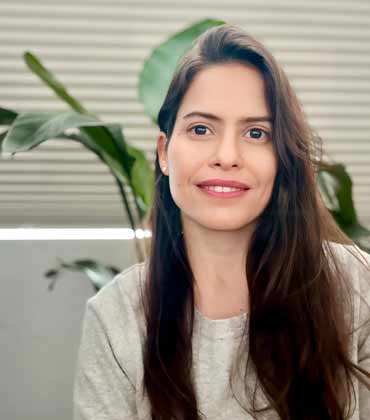
Navigating The U.S. Immigration System
Julia Fernandez Cocimano, Director Mobility, Immigration & Talent Programs, Altos Labs
Workers' Compensation

Strategic Rewards for Today's Workforce
Kia Reed, Total Rewards Manager, Walbec Group
Organizational Development
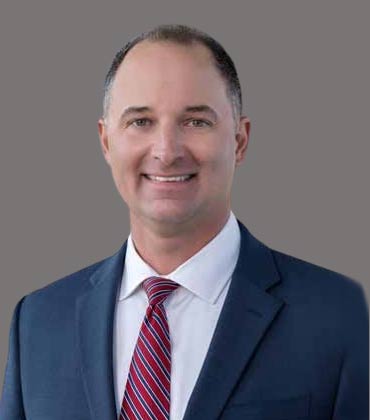
The Architecture of a High-Performance Workforce
Andrew Keaton, Director, Organizational Effectiveness, Learning and Technical Development, DTE Energy
Organizational Development
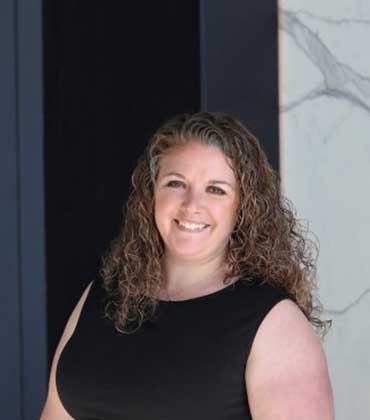
Culture Is Lived, Not Written
Molly Marr, Vice President, HR Excellence, AVE by Korman Communities
Corporate Training

Managing Compliance at the “Hotel California”
Kimberly Pederzani, Director of Training & Compliance, Dimension Hospitality

IN MY OPINION
Corporate Training
Learning that Serves the team and the Guest
Mary Cooper, Director of Learning and Development, P.F. Chang’s

LAST WORD
Corporate Training
Rethinking Hiring for Long-Term Organizational Impact
Vaughn Brown, SHRM-CP, Head of Talent Acquisition, Subaru of America
IN FOCUS

Empowering Tomorrow's Leaders: The Necessity of Succession Planning
Succession planning consultants help organizations build leadership continuity, align talent development with strategy, and ensure stable, long-term performance.
Cultivating Communication and Collaboration through Hotel Training Frameworks
Experiential hotel training uses simulation technology and mentorship to build soft skills, improve retention and create consistent, engaging employee development programs.
EDITORIAL
Building Resilient Workforces for the AI Era
Workforce transformation is increasingly being shaped by how organizations align leadership continuity, operational resilience and employee capability with the realities of AI-driven change. This edition of Manage HR explores how companies are modernizing development strategies and preparing employees for business environments where adaptability and human judgment remain essential.
Our cover story, GrowFast Advisory, recognized as the Top Workforce Succession Planning Consultant 2026, addresses a growing challenge facing organizations: preserving enterprise value during leadership transitions and technological disruption.
Alex Olivier, Sr. Director, Theatre L&D and Belonging at AMC Theatres, featured among the Top Learning and Development Leaders 2026, focuses on preparing associates for real-world decision-making through practical and adaptable training systems.
Kevin Jennings, Director of Learning & Certification at TALON, highlighted in the Top Learning and Development Leaders 2026, emphasizes measurable learning outcomes tied directly to customer success, operational efficiency and business performance. This issue also features Seacoast National Bank as one of the Top Learning and Development Leaders 2026 for its continued investment in workforce capability and leadership development.
Also featured in this edition is Hospitality Softnet, awarded Top Hotel Training Services 2026, for its work rebuilding sales capabilities across the hospitality sector through targeted training and practical sales coaching.
Lively Law Firm, selected as one of the Top Immigration Attorneys 2026, reflects this shift through its litigation-aware approach to immigration law, combining immigration representation with federal litigation when administrative processes stall.
This edition also features leadership perspectives from Lorena Santibanez, Vice President, Human Resources at CBRE and Andrew Keaton, Director, Organizational Effectiveness, Learning and Technical Development at DTE Energy. Santibanez examines how AI transformation is reshaping workforce expectations, while Keaton focuses on embedding learning directly into operational workflows tied to measurable business outcomes.

Be first to read the latest tech news, Industry Leader's Insights, and CIO interviews of medium and large enterprises exclusively from Manage HR Magazine
